




Scientists from China and Canada have successfully transplanted a human kidney after the organ’s blood type was converted from type A to the universal type O using special enzymes for the first time.
After being transplanted into a recipient who had been diagnosed with brain death, the enzyme-converted kidney functioned for at least two days without signs of hyperacute rejection.
This conversion could overcome the barrier of having to match donor and recipient blood types for transplants, which could help shorten waiting list times as the world grapples with organ shortages.
“The shortage of donated organs for transplantation has resulted in lengthy waiting lists and consequent deaths,” the team wrote in a paper published in the peer-reviewed journal Nature Biomedical Engineering on October 3.
“Even when organs are available, substantial challenges exist with the equality of organ allocation,” said the team, which was led by researchers from the University of British Columbia (UBC) and West China Hospital of Sichuan University.
“While transplantation of engineered animal organs offers some hope for the future, this remains many years away from general practice owing to the recent failure of engineered pig hearts and kidneys in humans, meaning that more efficient use of the available human organ pool is needed.”
Transplants are still the most suitable treatment for patients with end-stage kidney disease, a chronic, irreversible condition in which the kidneys no longer function well enough to meet the body’s needs.
For a match to be made between a transplant donor and recipient, doctors look at blood type and a handful of key human leucocyte antigens (HLA) – proteins on the surface of a cell that help the immune system distinguish foreign substances.
People have different blood types – A, B, AB or O – depending on the presence of specific antigens on the red blood cells, as well as antibodies in the plasma.
Those with type A blood have A antigens and anti-B antibodies, while those with type B have B antigens and anti-A antibodies, meaning they are unable to directly donate blood or organs to one another.
People with type O blood lack A and B antigens on their red blood cells, meaning they can serve as donors for A, B and AB recipients. Those with O negative blood in particular are universal donors, as they lack another antigen, the Rh factor, also used in blood typing.
People with type O blood have both anti-A and anti-B antibodies, so they can only receive blood or organs from other type O donors.
The need to match both blood type and HLA antigens means many patients, particularly those with type O blood, have to wait years to find a suitable donor, and some die before a match is found.
One method to overcome blood type incompatibility is to use desensitisation therapies on a recipient before the transplant, which lowers their pre-existing anti-blood group antibodies and suppresses the immune system to allow for a transplant from an incompatible donor.
As this process is demanding on the recipient and takes days, it is only practical for transplants from a living donor.
The research team – which also included scientists from the Second Affiliated Hospital of Chongqing Medical University, the Chinese Academy of Sciences and the China Telecom Corporation Sichuan Branch – instead presented a donor-centric approach to this issue.
In 2019, the team members from the University of British Columbia discovered type A to O conversion enzymes that could remove more than 98 per cent of the A antigens from the inner lining of blood vessels in the lung.
“These enzymes are highly active, highly selective and work at very low concentrations,” Jayachandran Kizhakkedathu, study author and a professor at UBC, said in a university news release on October 3.
In 2022, the enzymes were used to convert whole lungs, which brought up the question of whether converted organs could survive in a human body. The answer came in 2023 while Kizhakkedathu was on an overseas trip.
“Our collaborators showed me their data where, using our enzymes, they had converted a human kidney and transplanted it into a brain-dead recipient. It was working beautifully,” he said.
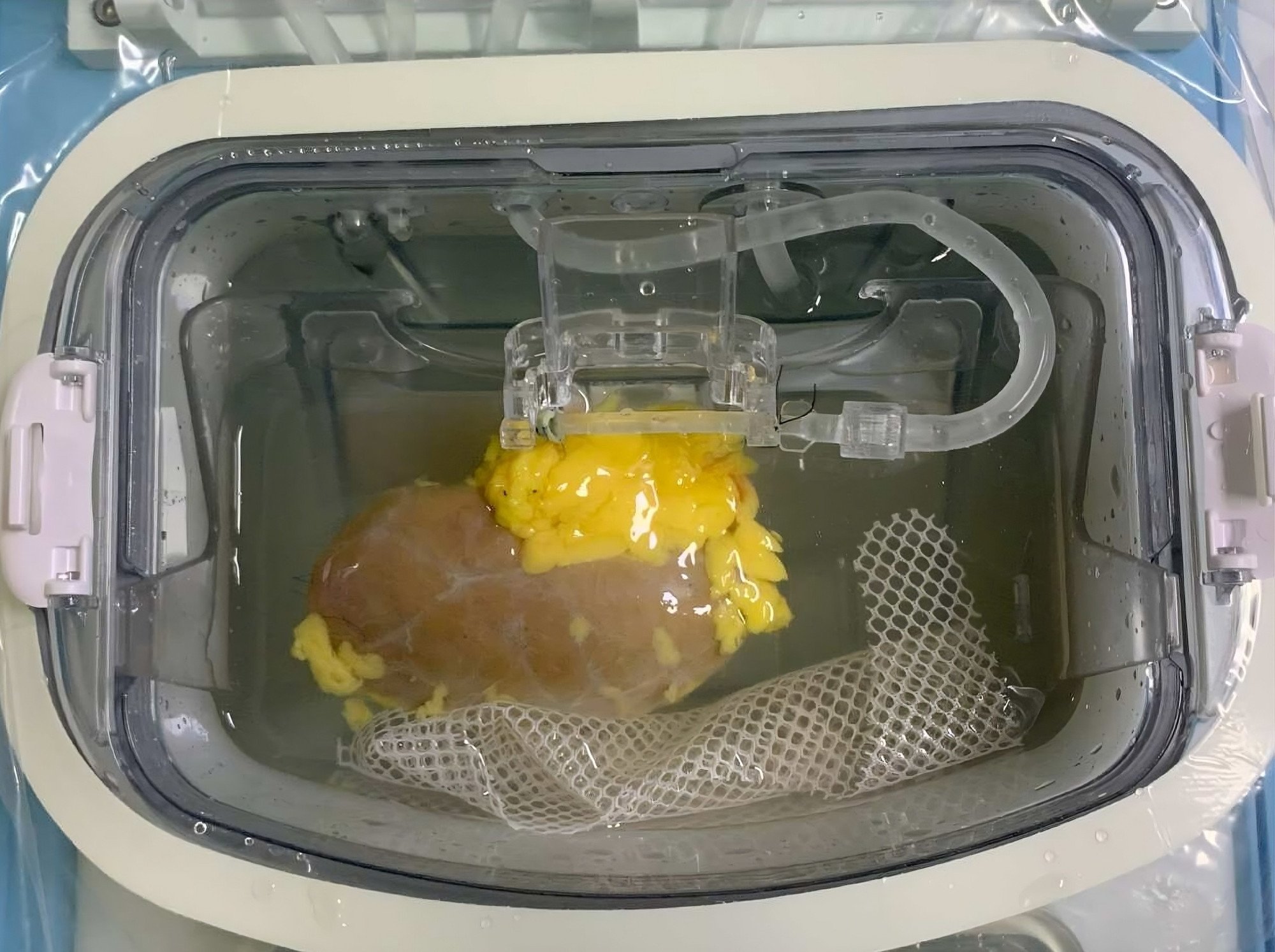
Using a machine that helped to preserve donor organs by pumping them with specialised solutions, the team could use the enzymes to convert a type A kidney in just two hours.
The converted kidney was then transplanted into an elderly type O recipient whose brain had ceased to function. Although the kidney showed no signs of rejection in the first two days post-transplant, its function deteriorated in the days after as some blood type markers re-emerged.
The authors noted the deterioration could, in part, have been because of the recipient’s critical condition and the multiple biopsies performed on the kidney during this period, which would not normally take place in a clinical setting.
The researchers said further studies would also need to be conducted with a longer follow-up time to better evaluate this transplant model.
“However, this graft-to-human model uniquely provides significant and valuable information that was previously unavailable and that cannot realistically be gathered from animal models or in vitro studies,” the team said.



