Huawei Technologies on Thursday unveiled hardware that it said could deliver world-class computing power without using Nvidia’s advanced chips, in a breakthrough that could potentially break the supply chokehold that constrains China’s aspirations in artificial intelligence.
The Shenzhen-based telecommunications equipment giant’s high-profile disclosure came just a day before a scheduled phone call between President Xi Jinping and his US counterpart Donald Trump, as Beijing seeks to minimise US export restrictions while pursuing a policy of self-reliance in technology.
Huawei said it had developed the “world’s most powerful” supernode computing cluster using local chipmaking processes, while also disclosing plans to launch upgraded Ascend AI chips over the next three years. The moves provide a boost to the country’s efforts to build self-reliance in AI computing and offer a wholesale alternative to the US-led AI hardware ecosystem.
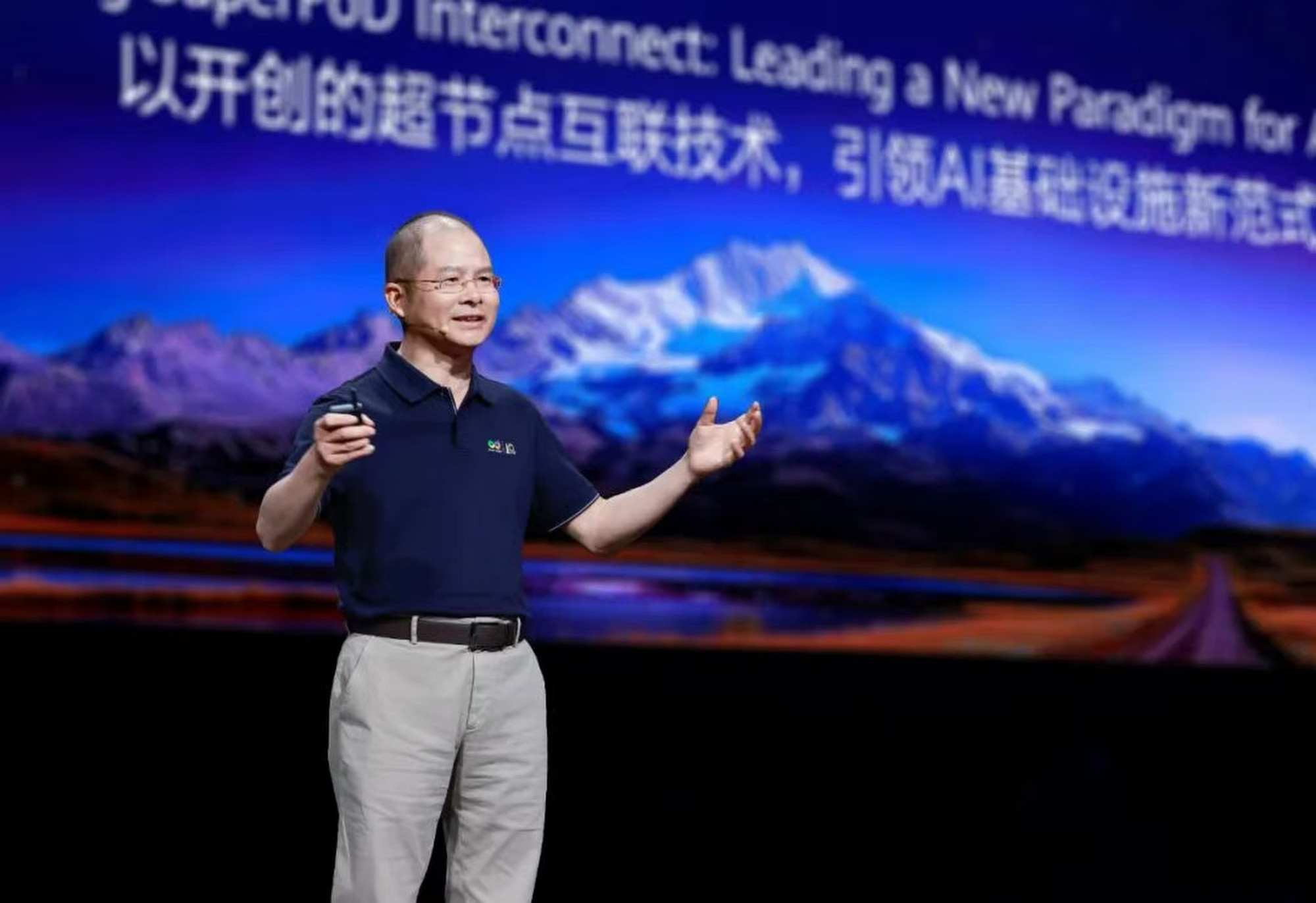
“Huawei is seeking to build a ‘supernode + cluster’ computing solution using chip manufacturing processes available in China to meet the growing compute needs,” deputy chairman Eric Xu Zhijun, who currently serves as the firm’s rotating chairman, said at the company’s annual Connect Conference in Shanghai.
Tilly Zhang, China technology analyst at Gavekal Dragonomics in Beijing, said Huawei’s announcement was “good timing for China to show strength and gain negotiating leverage”.
“Nvidia’s product quality is of course still superior, but I think China’s advanced chip manufacturing may have reached a turning point in that it is ready to compete openly in the market instead of being just a hidden project,” Zhang said. “In short, China still needs US chips for now, but probably in a much less significant way.”
Su Lian Jye, chief analyst at research firm Omdia, said Huawei was showing its “relentless desire to innovate” by enabling its customers to upgrade their infrastructure.
He noted that US-China tech tensions were “getting into a tit-for-tat situation” and that each side would likely seek solutions “at the negotiation table”.
Huawei’s new developments come as Beijing is pressing the country’s tech giants to stop buying the chips that Nvidia tailor-made for China, which were designed to comply with US export restrictions. On Beijing’s new stance, Nvidia CEO Jensen Huang said on Wednesday that he was “disappointed with what I see, but they have larger agendas to work out between China and the United States, and I’m patient about it”.
Beijing’s new stance on Nvidia marked a sharp contrast to a few months ago when Huang was lobbying Washington for permission to sell the H20, an AI chip tailor-made for Chinese clients, because it complied with US export restrictions. Nvidia eventually received the greenlight on the condition that it pay 15 per cent of H20 sales revenue to the US government.
US-sanctioned Huawei is playing a leading role in finding solutions that can empower China’s AI ambitions without relying on technologies from the US. Since the company was blacklisted by Washington in 2019 over national security concerns, it has kept its chip development plans close to its chest, leaving the market guessing about its progress.
Xu, however, put Huawei’s Ascend chip plans under the spotlight on Thursday. “Ascend chips are the foundation of our AI computing strategy,” he said.
Joe Fei, a semiconductor analyst at LongBridge Securities, said Huawei’s products already had a certain level of competitiveness in the Chinese market. “With the trend towards adopting localised computing power, these superior new products have a chance to win more clients,” he said.
Following the Ascend 910C, which has been available since the first quarter of this year, Huawei will release the Ascend 950 series, including the 950PR and 950DT, over the next year. Furthermore, Huawei said it would incorporate in-house-developed high-bandwidth memory (HBM) into these chips. The Ascend 960 and Ascend 970 are expected in 2027 and 2028, in a timetable that runs in parallel with AI chips from Nvidia and Advanced Micro Devices.
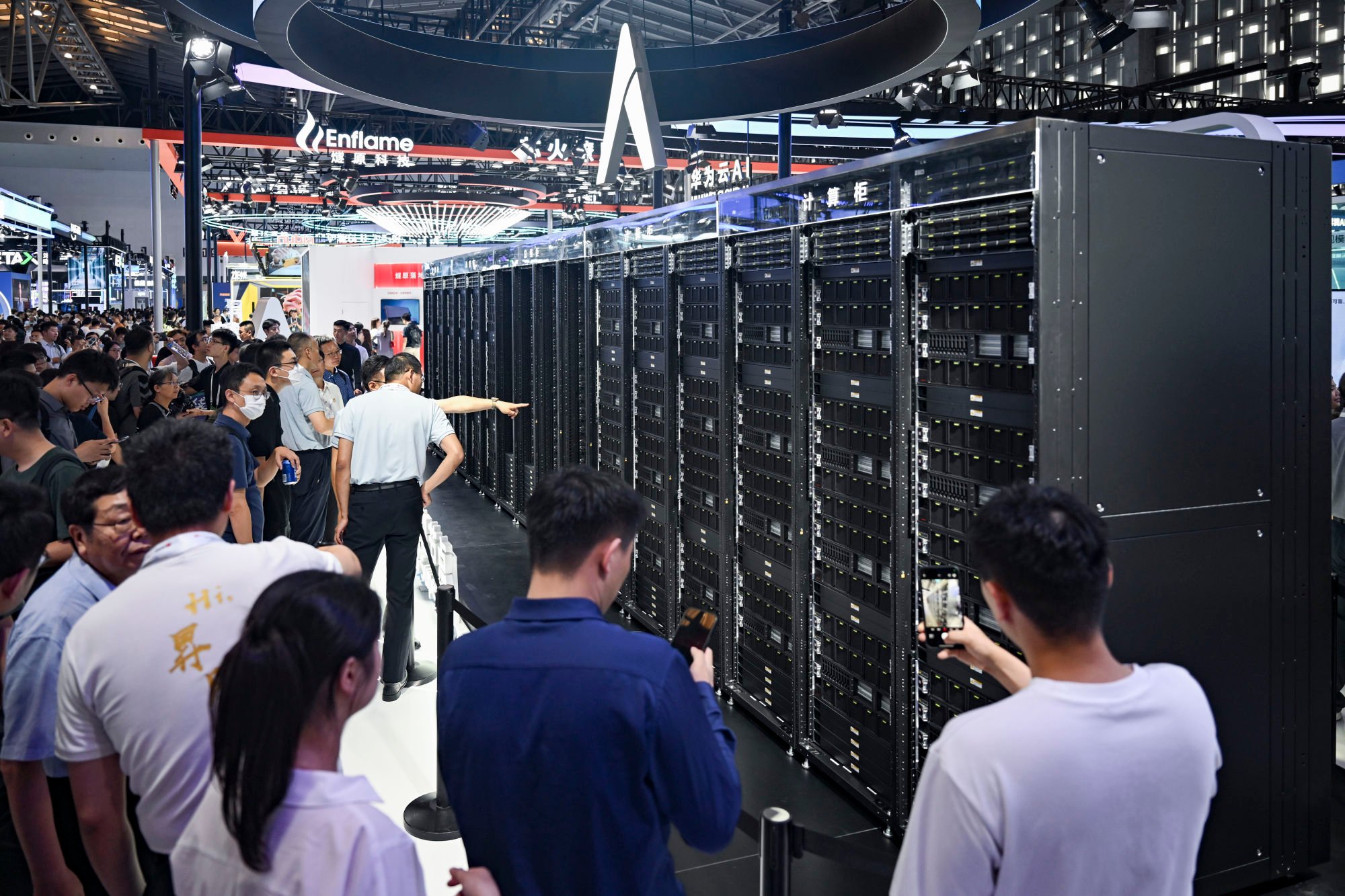
Huawei plans to use its 950DT chips in an AI stack called Atlas 950 SuperPoD, a system with 8,192 cards occupying an area of around 1,000 square metres and containing 160 cabinets, delivering 8 exaflops of FP8 computing power and 16 exaflops of FP4 computing power.
The stack would be available in the fourth quarter of next year, the company said. In a further step, an Atlas 950 SuperCluster can be developed based on the 64 Atlas 950 SuperPoDs to deliver a combined total of 524 exaflops in FP8.
Atlas 960 SuperPoDs, which can be powered by up to 15,488 Ascend 960 cards, and the Atlas 960 SuperCluster, which can aggregate millions of cards, would provide more powerful computing capabilities by the end of 2027, the company said.
The design echoed earlier comments by Ren Zhengfei, founder and CEO of Huawei, that Ascend chips could achieve state-of-the-art computing power by using methods such as stacking and clustering, even though the chips lagged behind those from the US “by a generation”.
Huawei has been pushing its CloudMatrix 384 system – based on the Supernode384 architecture – that clusters together 384 Ascend AI processors to deliver 300 petaflops of computing power, considered to rival Nvidia’s NVL72 system. Over 300 CloudMatrix 384 systems have been deployed for more than 20 clients, Xu said.
There were doubts from some analysts as to whether Huawei could smoothly implement its ambitious new blueprint.
“Given all the uncertainties around the scaled manufacturing process, we need to take the Huawei statements around the road map with a healthy dose of scepticism”, said Paul Triolo, partner at Albright Stonebridge Group in Washington. A potential weak link, he added, was that Huawei’s plan depended on domestic foundry leader Semiconductor Manufacturing International Corporation.
However, Triolo said Huawei had the potential to pull it off. “If any company can accomplish the miracle of producing AI hardware that is at least close to Western leaders, it is Huawei, which has demonstrated amazing resilience under the efforts of [the US] to undermine the firm’s entire business model over the past five years,” he said. -- SOUTH CHINA MORNING POST