
THE nation’s capital took a step back towards normality after deadly anti-corruption protests, as daily life returned with a curfew eased and an interim prime minister sworn into office.
Soldiers scaled back their presence on the streets, where they had been deployed in large numbers since Wednesday after violent demonstrations toppled the government and left parliament in flames.
At least 51 people were killed in the worst unrest since the end of a decade-long civil war and the abolition of the monarchy in 2008.
On Friday evening, 73-year-old former chief justice Sushila Karki was sworn in as interim leader, tasked with restoring order and addressing protesters’ demands for a corruption-free future.
Parliament was later dissolved, elections were set for March 5, 2026, and work to restore the government began.
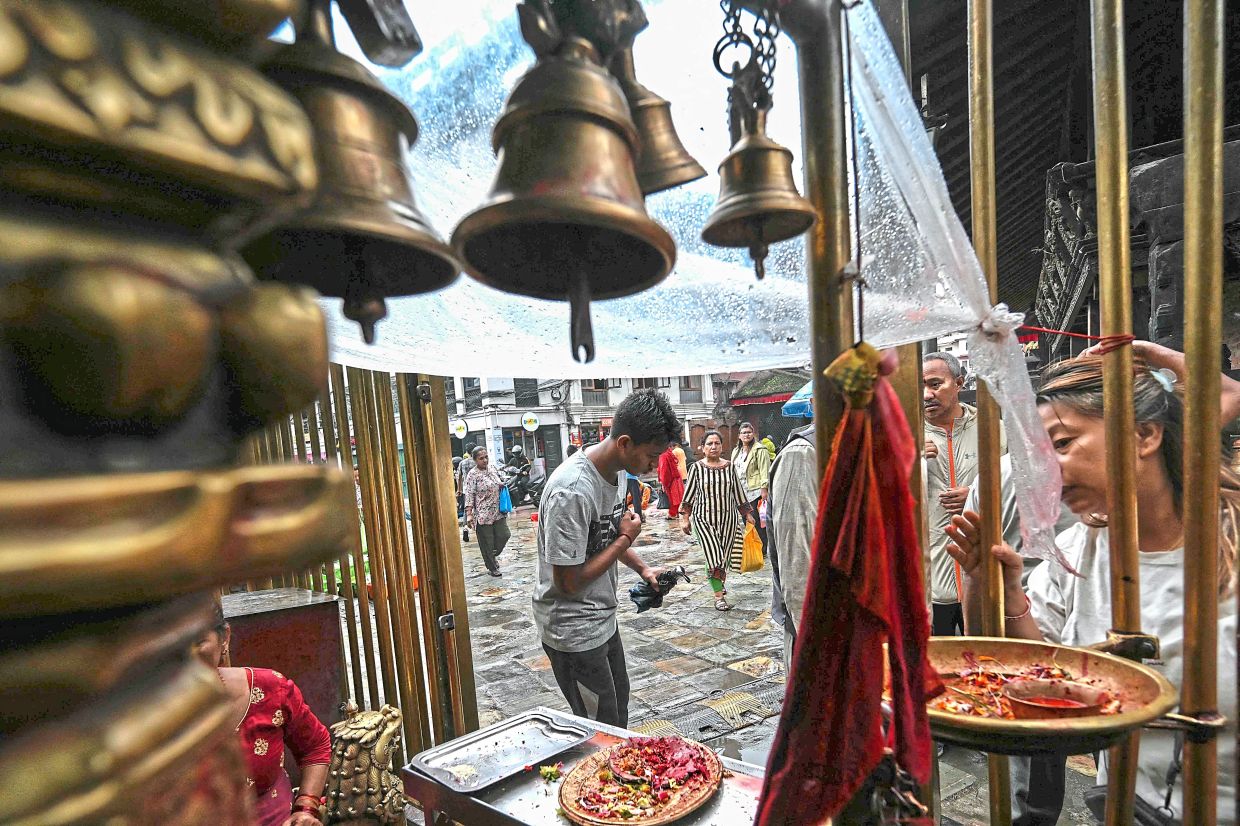
By yesterday morning, the mood on the streets was calmer, with markets opening, traffic returning and families visiting temples.
For many Nepalis, Sushila’s appointment carried both symbolic weight and the promise of change.
“Nepal has got its first woman prime minister,” said Suraj Bhattarai, 51, a social worker.
“We think that the prime minister – our former chief justice – will address Nepal’s fight against corruption and take good governance forward.”
The appointment of Sushila, known for her independence, came after intense negotiations by army chief General Ashok Raj Sigdel and President Ramchandra Paudel, including with “Gen Z” representatives, the loose umbrella title of the youth protest movement.
Thousands of young activists had used the app Discord to debate the next steps – and name Sushila as their choice of the next leader. The new prime minister appeared to be widely welcomed as people sought to put the unrest behind them.
“The interim government decision is good for now,” said Durga Magar, 23, who works in a Kathmandu shop.
“The main issue for the people, especially young people, at this time is corruption,” she said.
“It doesn’t matter whether it is Gen Z or anyone older in politics who tackles it – it just needs to stop,” she added.
Protests, which began Monday and escalated on Tuesday, fed into long-standing economic woes in Nepal.
A fifth of people aged 15-24 are unemployed, according to the World Bank, with GDP per capita standing at just US$1,447 (RM6,084).
Indian Prime Minister Narendra Modi offered his “best wishes” to Sushila yesterday, adding that New Delhi was “firmly committed to the peace, progress and prosperity of the people of Nepal.”
The protesters’ hope of rooting out endemic corruption is no easy task, while in terms of security, more than 12,500 prisoners who escaped from jails during the chaos are on the run.
But for many, Sushila’s swearing-in marks a break from the revolving door of ageing prime ministers who fuelled public anger with endless political horse-trading.
KP Sharma Oli, the 73-year-old leader of the Communist Party, quit as prime minister on Tuesday, ending his fourth term in the post. His whereabouts are not known.
“They were playing a game of musical chairs,” said Kathmandu businessman Shikhar Bajracharya, 32.
“There was no possibility for younger people to come into power.” — AFP