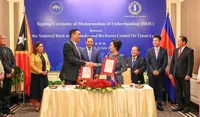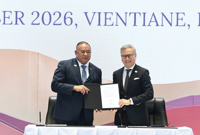
BANGKOK: A suspected scam call operation and a suspicious network of companies was discovered with links to a new free trade zone in Timor-Leste, the UN Office of Drugs and Crime (UNODC) said Thursday (Sept 11).
Scam centres have proliferated across South-East Asia and spread across the world, and the report highlights the ability of the criminal enterprises to relocate as some governments in the region launch crackdowns.
Such centres, usually walled compounds in remote areas that conduct computer-enabled scams that are estimated to cost victims tens of billions of dollars per year, have proliferated in recent years, especially in South-East Asia.
Scam centres in Laos, Myanmar and Cambodia have drawn global attention for running notorious romance scams, where a worker poses as an attractive young woman to lure targets into making false investments. They are also found in the Philippines and Laos, and UNODC warned in April that scam centres have appeared in Latin America and Africa.
In Timor-Leste, police raided a suspected scam centre in late August in the Special Administrative Region of Oecusse, detaining more than 30 foreigners for working without permission. The people detained came from Indonesia, Malaysia and China, but the UNODC report said it was unclear if they had been trafficked.
Oecusse is an exclave of Timor-Leste on the Indonesian half of the island the two countries share, and the region’s government opened a free trade zone called Oecusse Digital Centre in December 2024.
"The scale and nature of the activity we are now seeing - similar to what we were seeing at the earlier stages of South-East Asia’s scam industry - shows how far things have progressed,” said Benedikt Hofmann, deputy regional representative at UNODC for Southe-East Asia and the Pacific. "This is concerning, especially given the boost in connectivity Timor-Leste will be experiencing as part of becoming a full member of Asean.”
The nation of Timor-Leste is one of the poorest in the world, and has a population of 1.3 million. It is due to join the regional association of South-East Asian nations called Asean in October this year.
The UNODC said other companies with apparent links to scam networks were also found to be active in the region. The agency said one, an online gaming company, is connected with casino networks in Cambodia, owned by a Cambodian businessman with links Wan Kuok-koi, leader of the 14K Triad criminal gang and sanctioned by the United States.
Across countries in South-East Asia, free trade zones or special economic zones have been exploited to facilitate cyber-enabled scams, money laundering and other crimes.
Last year, the Philippines launched a nationwide crackdown in which the government deported thousands of workers found in scam centres. In February, Thailand, Myanmar and China launched a joint action that saw thousands of workers released. However, the centres themselves have continued to operate. - AP