




BEIJING (SCMP): According to ancient Chinese legend, the Hungry Ghost Festival – which falls on September 6 this year – is when the gate to the underworld opens, allowing ghosts of the deceased to pass through to the realm of the living.
But not all ancestors have good intentions, and it is not just human souls that take their once-a-year opportunity to visit the earthly dimension.
In Chinese mythology, there are many supernatural beings that inhabit other spiritual spheres. They are usually called yao guai in short – the two characters can respectively express “bewitching” and “strange” – but yao jing gui guai is the proper name for the entire category, which translates to “demons, spirits, ghosts and monsters”.
One of the earliest records of the word yao guai dates back to the Book of Han, a history of China initiated by Ban Biao (AD3-AD54), a notable Eastern Han court official and historian, and finished by his son, Ban Gu (AD32-AD92).
Although the book was mainly a historical account of the Han dynasty, it had brief mentions of ancient legends in relation to superstitions, natural phenomena and inexplicable events, the eeriness of which was described with the term yao guai.
The words yao, jing, gui and guai have always been somewhat interchangeable – perhaps for the purpose of better-sounding phonetics – but they do exist as four categories with clear and separate definitions. Find out more below.
1. Yao (demons)
In Chinese mythology, demons are animals and plants that transform into human shapes.
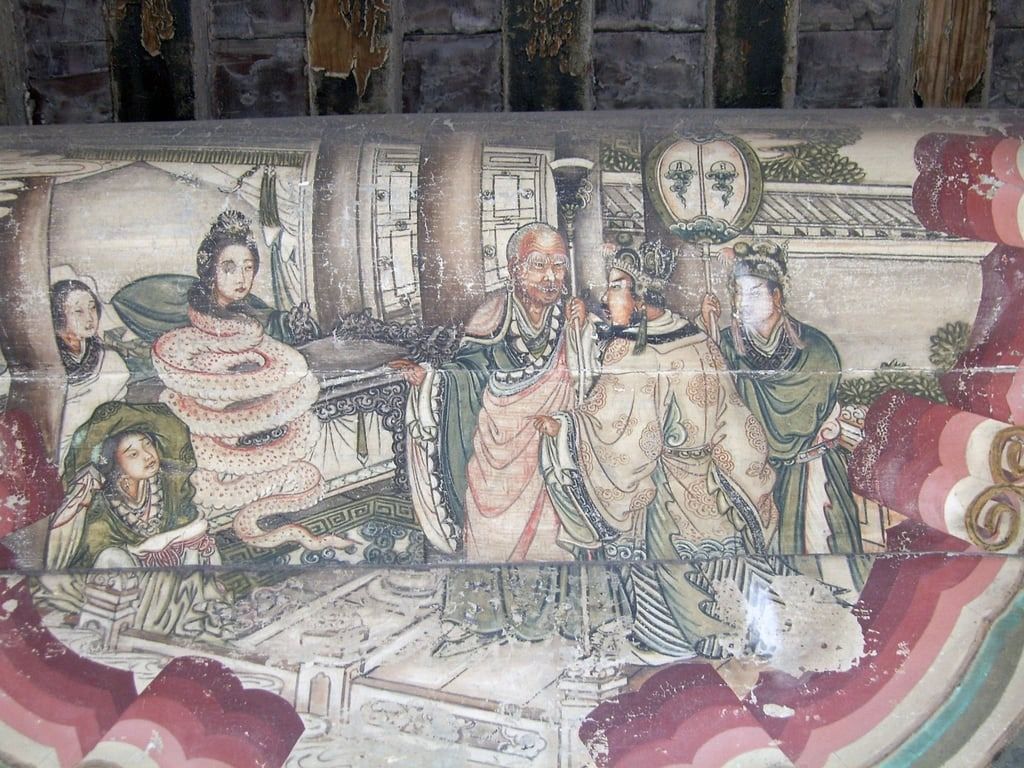
One of the best-known stories is Legend of the White Snake, a word-of-mouth tale that began to circulate as early as the Tang dynasty (618-907). It is considered one of China’s four great folktales.
The tale involves a white snake that, after a thousand years of disciplined Taoist training in a cave on Mount Emei in Sichuan province, is able to transform into a human woman.
From here, depictions vary: some of the earlier stories portrayed her as a malevolent seductress, while latter versions, especially since the Ming dynasty, depict her as a kind-hearted romantic who falls in love with a human man and encounters a series of events as a Buddhist monk attempts to tear them apart.
In 1972, Hong Kong songwriting duo Joseph Koo Ka-fai and Wong Jim adapted the tale in Pai Niang Niang, the first Broadway-style musical in Mandarin. It was revived in 2023 with a documentary titled Pan Niang Niang: The Last Osmanthus Blossom.
2. Jing (spirits)
Jing is the essence of living and nonliving entities, such as plants, animals, mountains and rocks. Unlike yao, they do not only manifest in human form.
They were widely written about in Journey to the West, a 16th-century fantasy novel by Wu Cheng’en that has been adapted many times in popular culture, including a 1996 Hong Kong series of the same name, which was revived in 2002 with the title The Monkey King: Quest for the Sutra.
One such being in the novel is Baigujing, or “white bone spirit”. The skeletal remains of a female corpse that has absorbed the essence of heaven, earth, sun and moon, she gains the ability to shape-shift. Upon seeing a fictional Buddhist monk by the name of Tang Sanzang, she sets out to consume his flesh to obtain immortality.
To get close to Tang, she first appears as a young maiden, then as an old woman. She is detected both times by Sun Wukong – the novel’s main character, a monkey born from a magical stone – and beaten each time. Finally, she turns into an old man who claims his wife and daughter were killed by Sun.
Her masterful manipulation leads Tang not to trust Sun, which results in him almost getting eaten.
3. Gui (ghosts)
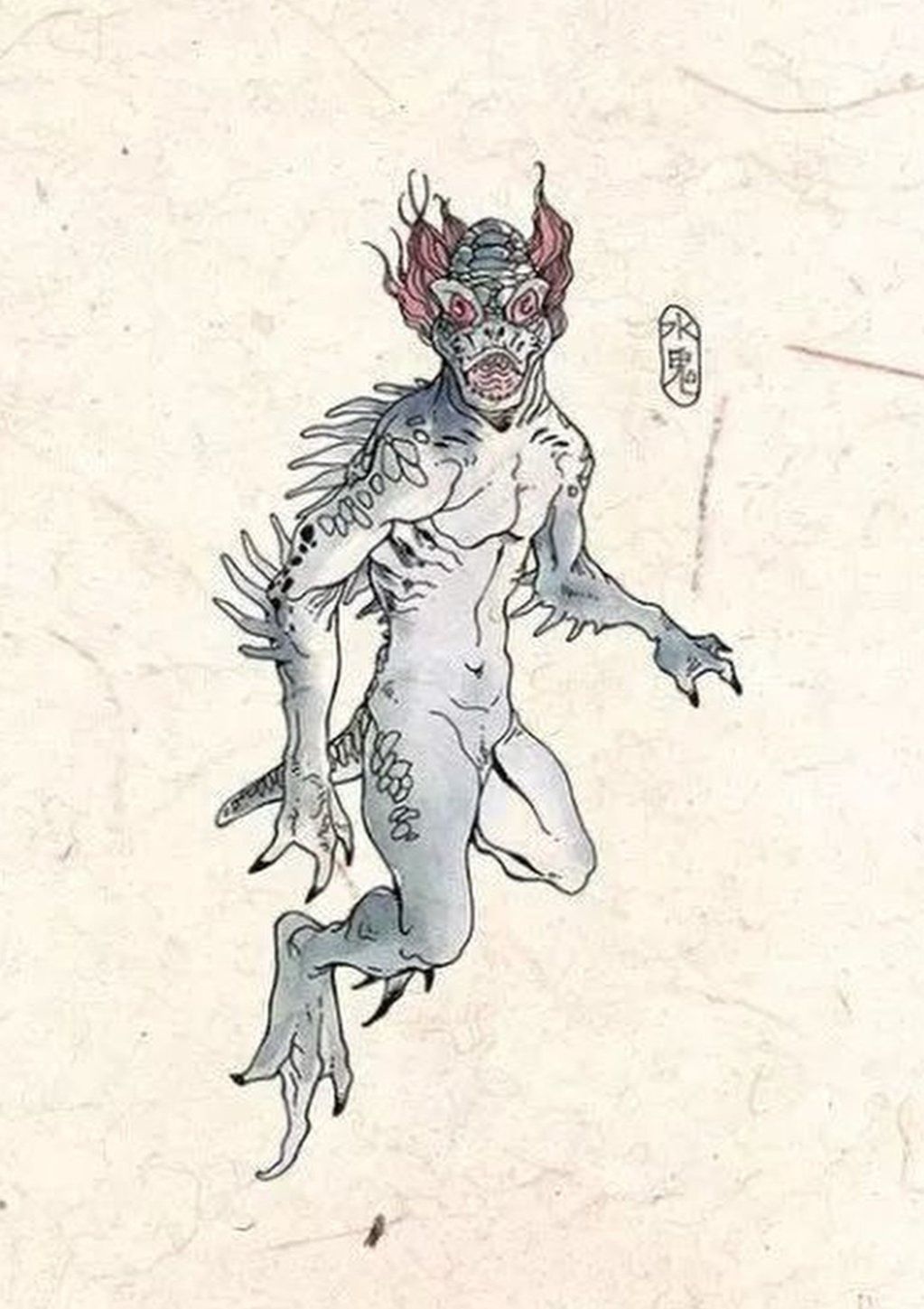
In the 2023 Encyclopaedia of Chinese Monsters, Chinese author Zhang Yun cites a tale from the Jin dynasty (1115-1234) about a gui who drowned and was unable to pass over to the other side.
The apparition tries to pull an innocent passer-by into the river so that he would take his place as a “drowned ghost”, thus releasing him from his limbo.
According to lore, such water gui do not always seek substitutes, but also cling to those who survive floods or nearly drown so that they may cause havoc elsewhere.
4. Guai (monsters)
Similar to its English translation, guai are anomalous creatures that may have features resembling familiar animals such as hounds or snakes but exhibit significant deviations in size or behaviour.
The Painted Skin is a well-known short story that colours a gory picture of a guai.
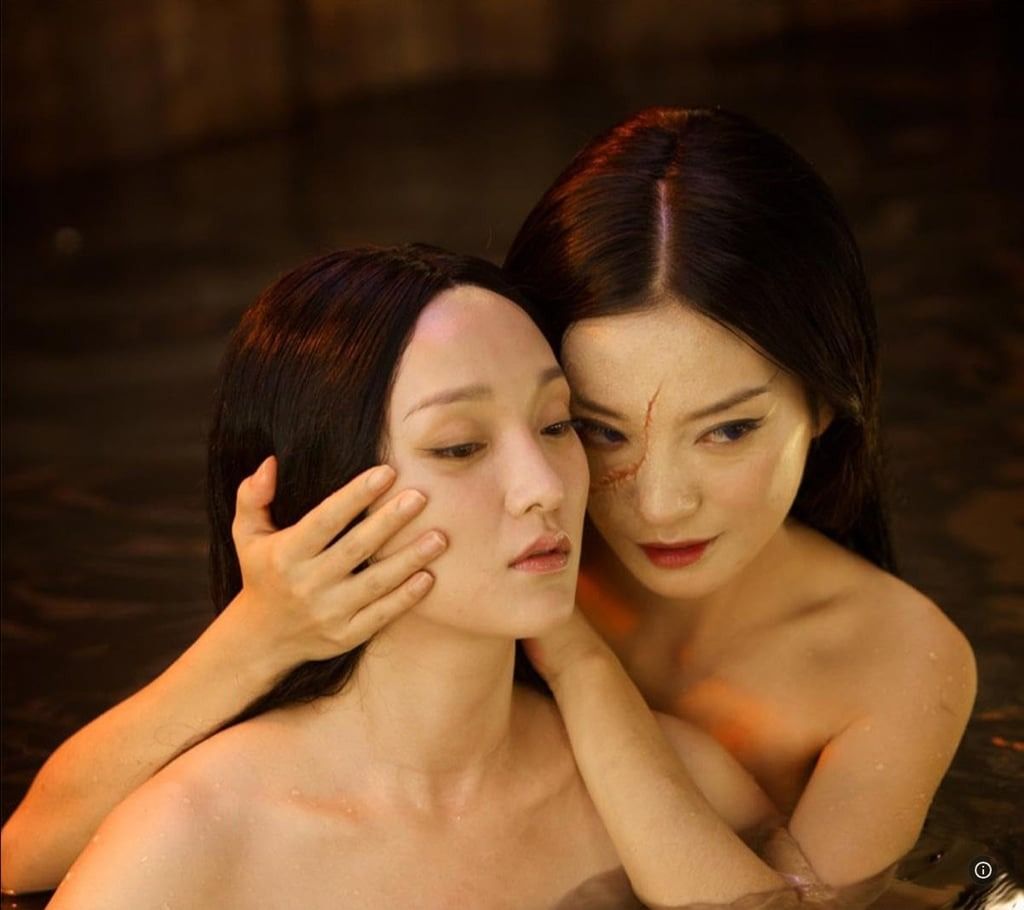
Wang is a scholar who takes pity on, and is enchanted by, a beautiful young woman who says she fled from her home. He decides to take her in, despite his wife’s objections, and eventually does the deed with the young woman in his study.
A while later, at the marketplace, he runs into a Taoist priest who tells him that he is possessed by malevolent spirits. Wang starts to have suspicions about the young woman, but also thinks to himself that such a pretty face is surely not a monster.
He returns home, peers through the window and sees a green-faced monster with great jagged teeth wielding a brush to paint upon a giant piece of human skin. It then puts on the skin to transform into the beautiful woman, who eats Wang’s heart not long after.
This cautionary femme fatale story inspired numerous adaptations in contemporary mainstream media, including the 2008 film Painted Skin and its 2012 3D sequel, Painted Skin: The Resurrection – two of the most popular mainland Chinese fantasy films in recent decades.


