PHNOM PENH: The number of Cambodians displaced by the recent border clashes with Thailand has sharply decreased, with many families now returning to their homes, according to the latest Situation Report from the Humanitarian Response Forum (HRF).
As of September 4, the National Committee for Disaster Management (NCDM) reported that 18,165 people remain displaced, down 35 per cent from a week earlier.
“At the peak of the crisis on July 30, following the fiercest fighting, more than 172,000 people had been forced to flee their homes,” according to Unicef Cambodia, citing the HRF’s September 5 report.
“Today, 87 per cent of them have returned to their villages in Preah Vihear and Oddar Meanchey provinces,” it added.
The report said of those still displaced, 14,278 remain in 40 sanctuary sites, while 3,887 are staying with relatives or friends.
Preah Vihear hosts the largest number of displaced people (12,054), followed by Siem Reap (5,222) and Oddar Meanchey (889).
The returns accelerated after the August 8 General Border Committee meeting in Malaysia, which produced a 13-point ceasefire agreement that has largely held, easing tensions and restoring a degree of security.
Unicef Cambodia said however, officials warn that some areas remain too dangerous due to the presence of unexploded ordnance, meaning limited displacement may persist.
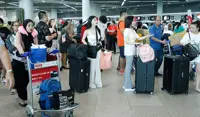
Concerningly, the number of Cambodian migrant workers returning from Thailand continues to rise, reaching 876,666 people as of 3 September, raising concerns about lost income for the families who depended on their remittances.
Humanitarian agencies, working alongside the Cambodian government, are focussing on a dual approach. They are continuing to support the most vulnerable households still in displacement sites. They are also assisting families returning home with early recovery efforts, such as repairing homes, restoring livelihoods and re-establishing basic services.
“So far, over 149,500 people in seven provinces have received assistance,” said the report.
The majority benefited from water, sanitation and hygiene support (136,662 people), followed by food aid (75,384 people) and shelter assistance (61,371 people).
Efforts are also underway in education, healthcare, protection and WASH (water, sanitation, and hygiene).
Unicef is supporting malnutrition screening among children under five, with dozens diagnosed and now receiving treatment.
The World Health Organisation is strengthening outbreak detection systems in displacement sites, while Unicef and partners continue vaccination campaigns.
The United Nations Population Fund has provided dignity kits for women and girls, and child-friendly spaces remain open to support nearly 4,000 children.
Agencies are also providing shelter kits, mosquito nets, hygiene supplies and constructing new latrines and boreholes.
The HRF, co-led by the World Food Programme and DanChurchAid, is working closely with the NCDM and provincial authorities to align humanitarian efforts with government response plans.
A multisectoral early recovery assessment conducted in late August identified key needs in agriculture, health services, schooling, water quality and psychosocial support.
Officials stressed that while most families have gone home, early recovery support remains critical.
Many households are returning to damaged homes, contaminated farmland and disrupted livelihoods. - The Phnom Penh Post/ANN