




At a time when the United States is decoupling from China on cutting-edge chip technology, Nvidia has unveiled its list of suppliers for the advanced 800 VDC power architecture powering next-generation AI data centres.
Among American and European giants was an unexpected name: Innoscience, a Chinese company specialising in gallium nitride (GaN) technology.
Innoscience marks China’s growing clout in the high-stakes semiconductor race, and behind the company’s rapid rise is Luo Weiwei, a former Nasa scientist who spent 15 years advancing aerospace technologies in the US before returning to China.
Luo founded Innoscience in 2015, betting big on GaN – a material poised to redefine efficiency in power electronics.
In less than six years, her company became the world’s first to mass-produce 8-inch silicon-based GaN wafers, leapfrogging industry norms and positioning China at the forefront of third-generation semiconductor technology.
Now headquartered in Suzhou and publicly listed in Hong Kong, Innoscience is not only the largest dedicated GaN manufacturer globally but also a strategic asset in China’s quest for technological self-reliance.
With a 29.9 per cent share of the 2024 global GaN power device market and a production capacity racing towards 70,000 wafers per month, the company is fuelling everything from fast chargers to AI data centres and defence systems.
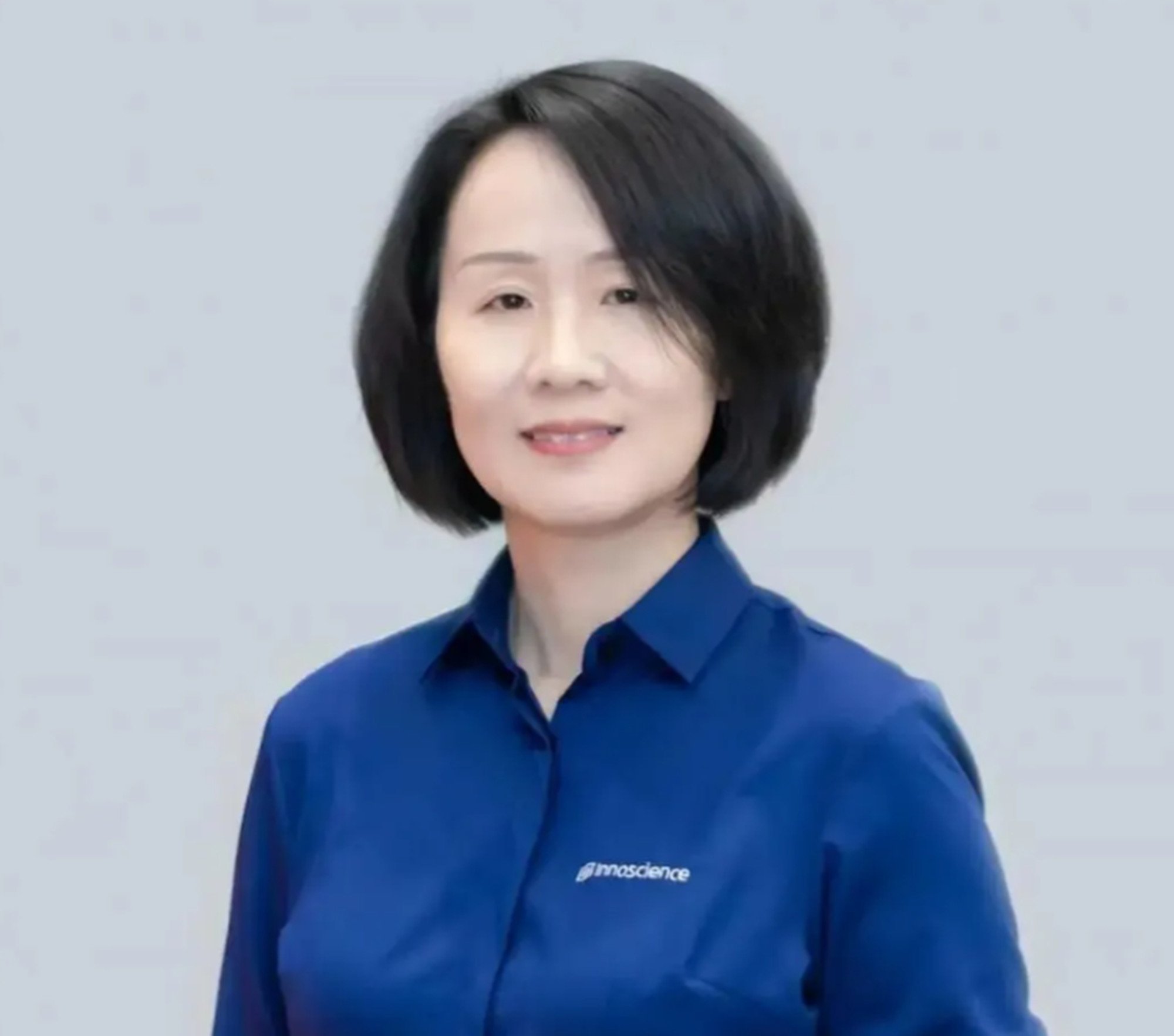
Luo Weiwei, the once low-key scientist, has quietly become one of China’s most powerful players in the battle for semiconductor supremacy.
GaN is a third-generation semiconductor material offering advantages such as higher energy efficiency and reduced size compared with traditional silicon-based chips. It is widely used in devices such as chargers, 5G base stations, radar systems, military communications and aerospace applications.
According to Innoscience’s website, the company is involved in the design, development and production of various types of GaN products, including integrated circuits, wafers and modules, serving applications across multiple sectors such as consumer electronics, LED lighting, data centres and new energy vehicles.
Information about her childhood and early education is limited. But according to a report on Tuesday by the Chinese new media platform QbitAI, Luo was born in 1970 and is said to have ancestral roots in Zhuji, Zhejiang province.
Luo earned her doctorate in applied mathematics from Massey University in New Zealand. In 1999, she joined a Nasa research institute and rose from senior project manager to chief scientist over the next 15 years. According to QbitAI, she was working at Nasa’s Marshall Space Flight Center in Huntsville, Alabama, where she researched rocket fuel combustion. Luo also established two companies that focus on new materials.
For her third venture in 2015, Luo set her sights on the emerging GaN technology. “GaN represents the future of third-generation semiconductors and China cannot afford to miss this opportunity again,” she was quoted as saying.
While 6-inch gallium nitride technology was widely adopted at the time, her start-up aimed to manufacture 8-inch chips because larger wafers deliver superior performance per unit cost. However, this increased the technical complexity exponentially.
According to a July report by a social media platform which features female entrepreneurs, Luo’s team initially faced many hardships. She led her engineers to the secondhand market to hunt for used machinery as the West refused to sell some of the critical equipment her company needed.
Backed by a good team, substantial government and private investment and a comprehensive local supply chain, Innoscience achieved a technological leap in under six years and began mass producing gallium-nitride-on-silicon (GaN-on-Si) power chips in 2021.
The company’s success also rested on China’s dominance of gallium. China produces 98 per cent of the world’s gallium and has banned its export to the US, making it more difficult and costly for the Pentagon to acquire GaN-based chips.
However, cross-border commercial disputes and geopolitical tensions between China and the US also cloud the prospects of the Chinese chipmaker, as Washington is pushing hard to constrain China’s chip development.
Last November, the US International Trade Commission ruled that Innoscience Technology had infringed a patent held by its American rival, Efficient Power Conversion Corp.
This month, the Munich Regional Court ordered the Chinese manufacturer to stop selling its gallium nitride products in Germany, ruling that they infringed a patent held by Infineon Technologies, Germany’s largest semiconductor manufacturer. -- SOUTH CHINA MORNING POST


