
China’s Tiangong space station has set a new record in space-based materials research after a tungsten alloy was heated to temperatures exceeding 3,100 degrees Celsius (5,612 degrees Fahrenheit).
That surpasses the highest temperatures previously achieved aboard the International Space Station (ISS).
On the ISS’s Japanese module, Kibo, scientists used a similar method – known as electrostatic levitation – to suspend tiny metal samples in mid-air and heat them with lasers, reaching around 3,000 degrees. The technique eliminates the need for a physical container that could contaminate or interfere with the sample at extreme temperatures.
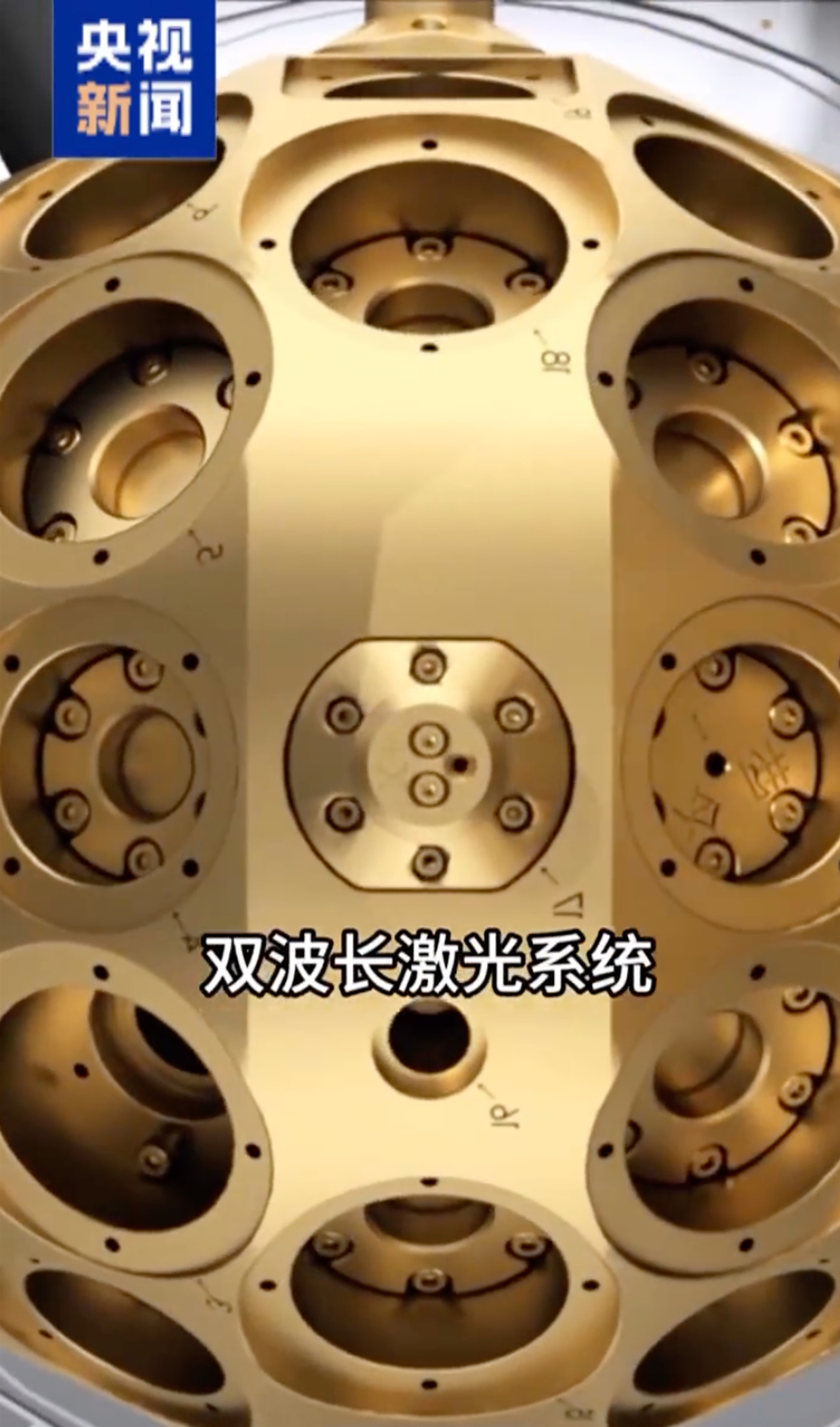
The Chinese experiments, conducted in a container-free laboratory cabinet inside Tiangong’s core module, aimed to study heat-resistant materials used in fusion reactors, rocket engines and hypersonic vehicles, according to state broadcaster CCTV.
The cabinet was developed by physicist Hu Liang and his team at Northwestern Polytechnical University in Xian, Shaanxi province.
“The findings will help scientists design better tungsten alloys and support fundamental research into ultra-high-temperature materials for nuclear and aerospace applications,” Hu told CCTV.
He added that the experiments also demonstrated the reliability of the cabinet. In operation for four years, the device has been used to test tungsten alloys, niobium alloys and other advanced materials in orbit.
Hu noted two key advantages of conducting such research in space. First, the microgravity environment allows molten tungsten to form a nearly perfect sphere, making it easier to precisely measure properties like surface tension and viscosity.
Second, tungsten’s high density makes it difficult to mix uniformly with other elements on Earth – heavier components tend to sink while lighter ones rise. “But in microgravity, we can produce alloys with a much more uniform composition and structure, which helps improve their performance,” he said.
Tungsten is the most heat-resistant metal known, with a melting point of about 3,420 degrees. Its extreme thermal stability makes it indispensable for high-performance applications, especially in harsh environments such as nuclear fusion reactors. Yet scientists still struggle to fully understand how it behaves at the edge of its thermal limits.
Containerless experiments using levitation began on Earth in the late 1980s and were introduced to the ISS about a decade ago by European and Japanese teams.
For the Tiangong experiments, Hu’s team built a prototype electrostatic levitation set-up in a ground lab, where they tested and refined the technique before adapting it for space, according to the CCTV report.
The record for such experiments on Earth was set at Nasa’s Electrostatic Levitator at the Marshall Space Flight Centre in Huntsville, Alabama, where temperatures of up to 3,400 degrees were reached while testing ultra-high-temperature materials like tungsten. - SOUTH CHINA MORNING POST