




Hong Kong’s restaurant sector is in crisis, with a wave of closures, shrinking margins and residents lured by cheaper options locally and across the border. In the second of a two-part series, the Post looks at how operators are bucking the trend to thrive and survive. Read part one here.
Shortly after Italian chef Stefano Rossi opened his restaurant in one of Hong Kong’s poorest neighbourhoods, he began to worry he had bitten off more than he could chew.
The restaurant, tucked away in a corner of the food court at Dragon Centre shopping centre in Sham Shui Po, was racking up daily losses. But its fortunes began to change after a few weeks, following positive reviews on social media.
“We got kind of lucky at the beginning, because some video went viral,” said Rossi, who helped design the first menu of the popular Italian restaurant chain Pici.
The unusual choice of location was all part of the package, as Rossi set his sights on luring curious diners who had few options for quality Western cuisine in the neighbourhood.
“I knew from day one that this place had very good potential. The area is very busy and we also want to give a chance to the nearby residents to taste real Italian flavour,” he said.
Rossi added that he was keen to offer lower prices than other sit-down restaurants while keeping quality high by making all the pasta and sauces by hand.
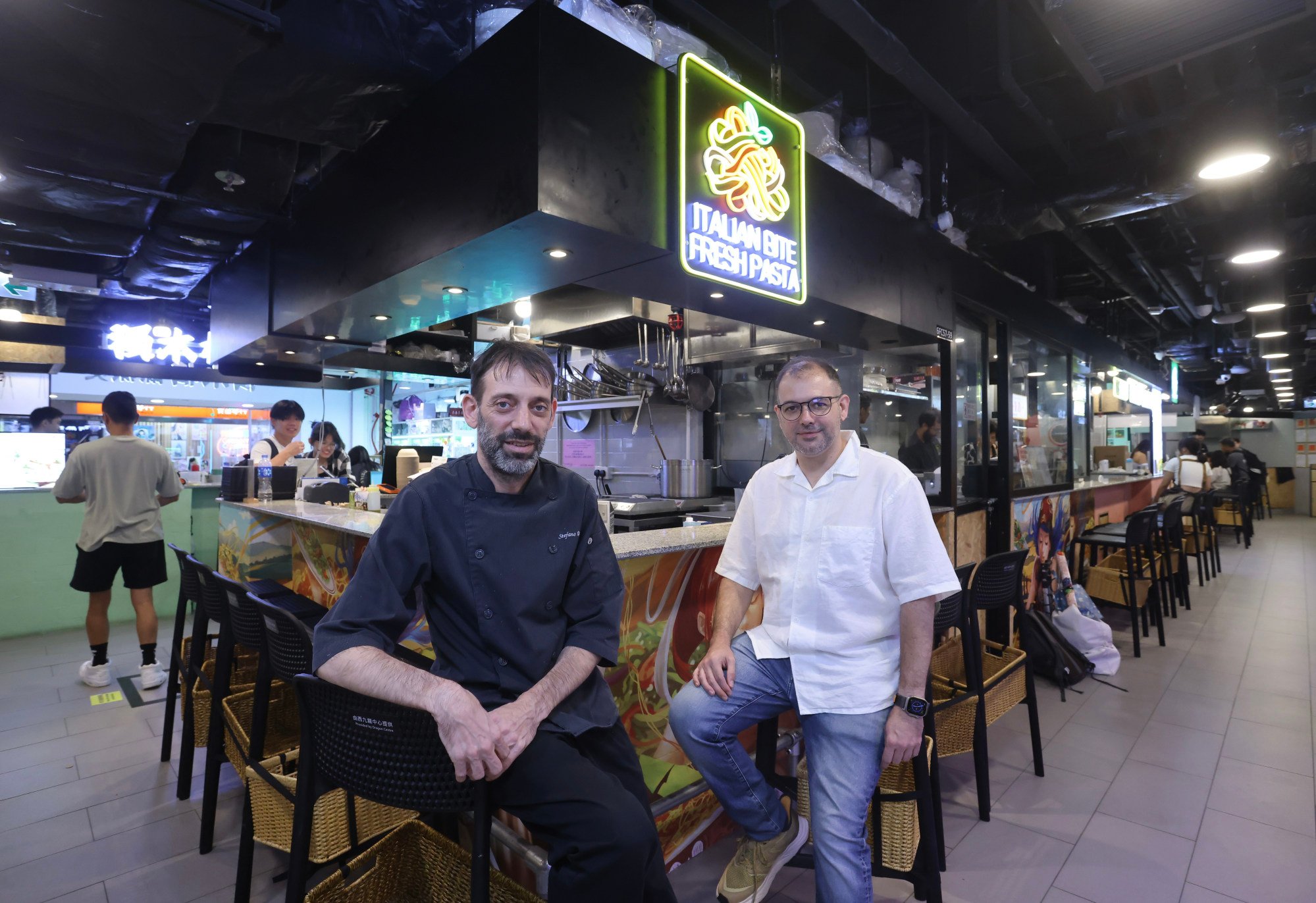
He and business partner Lorenzo Aussello are among the many Hong Kong restaurateurs employing novel strategies to tap into trends, innovate and surprise customers as they try to stay afloat during some of the hardest times for the sector in decades.
While quality remains fundamental, industry insiders agree that simply providing good food is no longer enough. So, what ideas are restaurants cooking up to attract diners and how well are they working?
More than just good food
Economists and analysts also called on operators to “embrace the new normal”, warning that those who failed to do so would eventually go bust.
“Those less competent players who previously survived due to favourable market conditions must now improve and do better things, which ultimately benefits consumers,” said Vera Yuen Wing-han, a University of Hong Kong economics lecturer.
This is especially true for restaurants targeting a once-lucrative section of the market – tourists.
Restaurateur Tina Lam opened a new branch of her Lady 13 Kitchen chain in Tsim Sha Tsui last year with hopes of attracting hungry tourists. But the modern Cantonese restaurant, known for its healthy noodle soups, struggled to gain traction at its new location.
Lam, who launched the chain in 2018, said the slow start was possibly due to a combination of weaker tourism spending and the broader economic downturn.
“I’ve been in the food and beverage industry for 20 years, and the recent years have been the hardest,” she said.
“But I really enjoy connecting with my customers and listening to their feedback. This time, they helped me identify a new strategy.”
Her diners had told her of a nearby mosque, which made her realise there could be demand for halal food.
Her research led her to the Tourism Board’s push to promote the city as a Muslim-friendly destination, part of which involved explaining to restaurants how they could apply for halal certification.
Lam decided to introduce halal, vegetarian and keto options to her menu, helping to widen her customer base.
Rida and Suman, two Muslim students in their twenties who were visiting the restaurant for the first time, said they found out about it through social media.
“There are definitely more halal food options in the city now, but not in all districts,” said Rida, who had come from Tin Shui Wai to try the restaurant.
“We felt the options on the halal menu were a bit limited, and the portions seemed big. It would be better if there were smaller sample sizes for us to share and try more variety. But we are still happy to try.”
Maria del Pilar Pozo, who works nearby, said she had visited the restaurant three times in two weeks after her first meal there.
“Going out with friends is difficult because everyone has different preferences,” said the 38-year-old teacher, adding that she particularly appreciated the halal certification and vegetarian options.
Her fiancé had been a vegetarian and still preferred the food on occasion, so the couple decided to return more than once.
Back at Rossi’s Italian Bites eatery, construction sector worker King Lee said he tried to get in the queue multiple times, but the wait was too long.
“I heard from a YouTube video that the place was opened by an Italian chef. It is rare in this neighbourhood and I assume the food must be very authentic,” Lee said.
On one recent visit he finally had the chance to order the HK$78 tagliatelle with smoked salmon.
He said the item was a bit more expensive than other options in the food court, which were usually priced around HK$50. But he said he was willing to pay extra “as long as the food quality was worth it”.
He said he would come back again for the quality of food, although the portion was smaller than he had expected.
Price points
Options are one thing, but price sensitivity has become a headache for operators who had once thrived on free-spending diners.
Alvin Leung, a judge on the cooking reality show MasterChef, said he had gone from “one end of the spectrum to the other”.
In May, he opened a new cha chaan teng featuring his own take on Hong Kong-style cafe classics. But customers familiar with his two-Michelin-star restaurant Bo Innovation, which specialises in molecular gastronomy with a tasting menu priced at HK$1,280 per head, may be surprised to learn they can visit MD Cafe with a more modest budget.
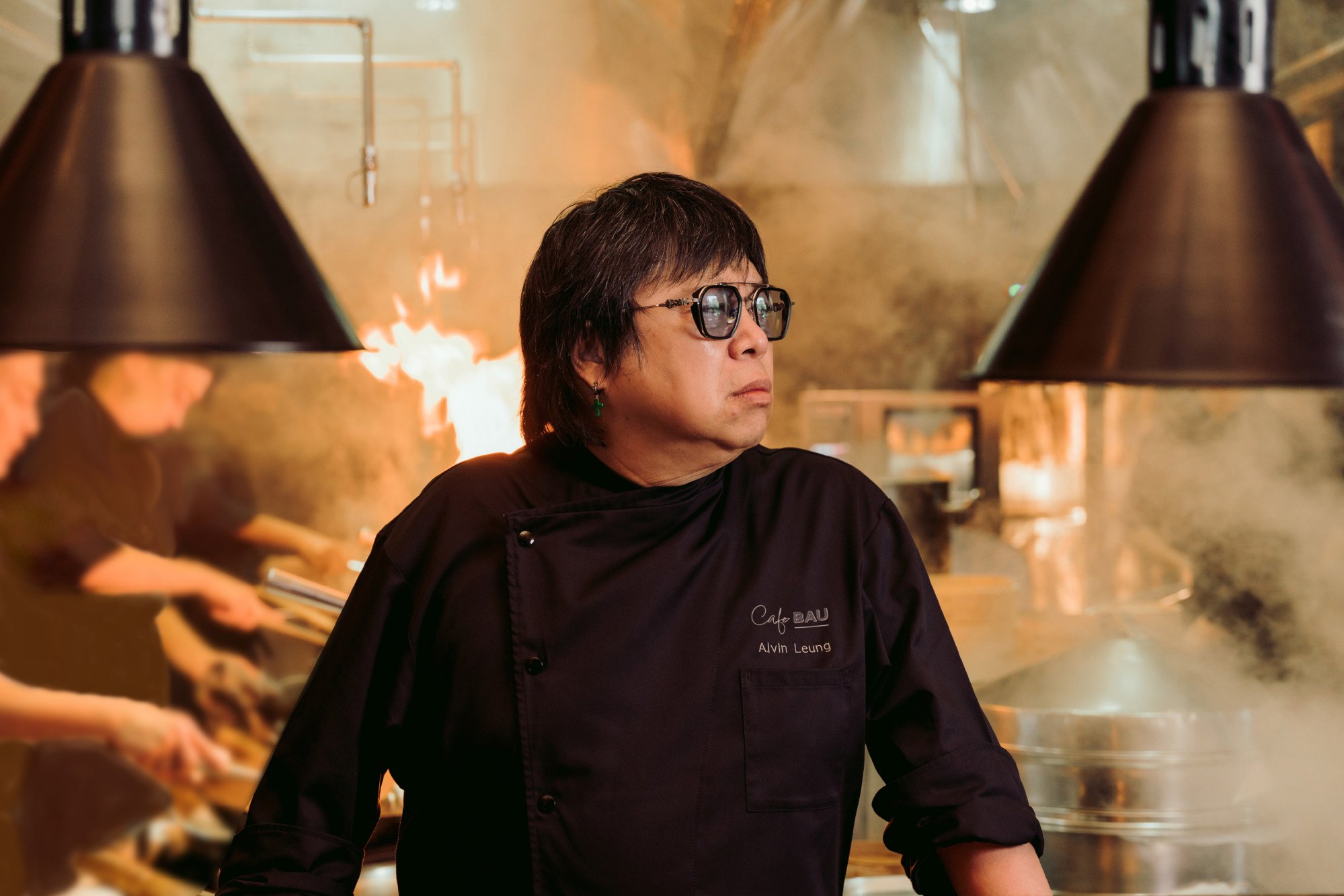
Among the items on offer at the new Tsim Sha Tsui restaurant is the souffle French toast at HK$42.
“The demand has definitely slowed down. [You have] to base your business model on less extravagant customers, and you would probably have to make your menu available for a bigger slice of the market,” the celebrity chef said.
“This means that you have to change the food to be more comfortable, more approachable, and your price as well ... if you want to operate as a more feasible business, it’s actually more advantageous to go to the other side of the spectrum.”
Leung said the new venture cost him about HK$1.5 million to HK$2 million, which he expected to recoup in about three years.
He has also made changes to his existing businesses by moving restaurant The Demon Celebrity from Central to Causeway Bay, with the eatery now under the Lubuds dining group.
Jacky Yeung, who was visiting MD Cafe for the first time, ordered the “MD smash pork chop rice” for lunch, a take on classic Cantonese steamed minced pork rice. The dish comes baked and in a cream sauce for HK$98.
“You don’t see this dish anywhere else and the patty is crunchy on the outside but soft on the inside; it’s just right,” said the logistics professional in his thirties, who had already decided he would return.
“The pricing is more expensive than your average cha chaan teng, but that’s reflected in the quality. It’s reasonable.”
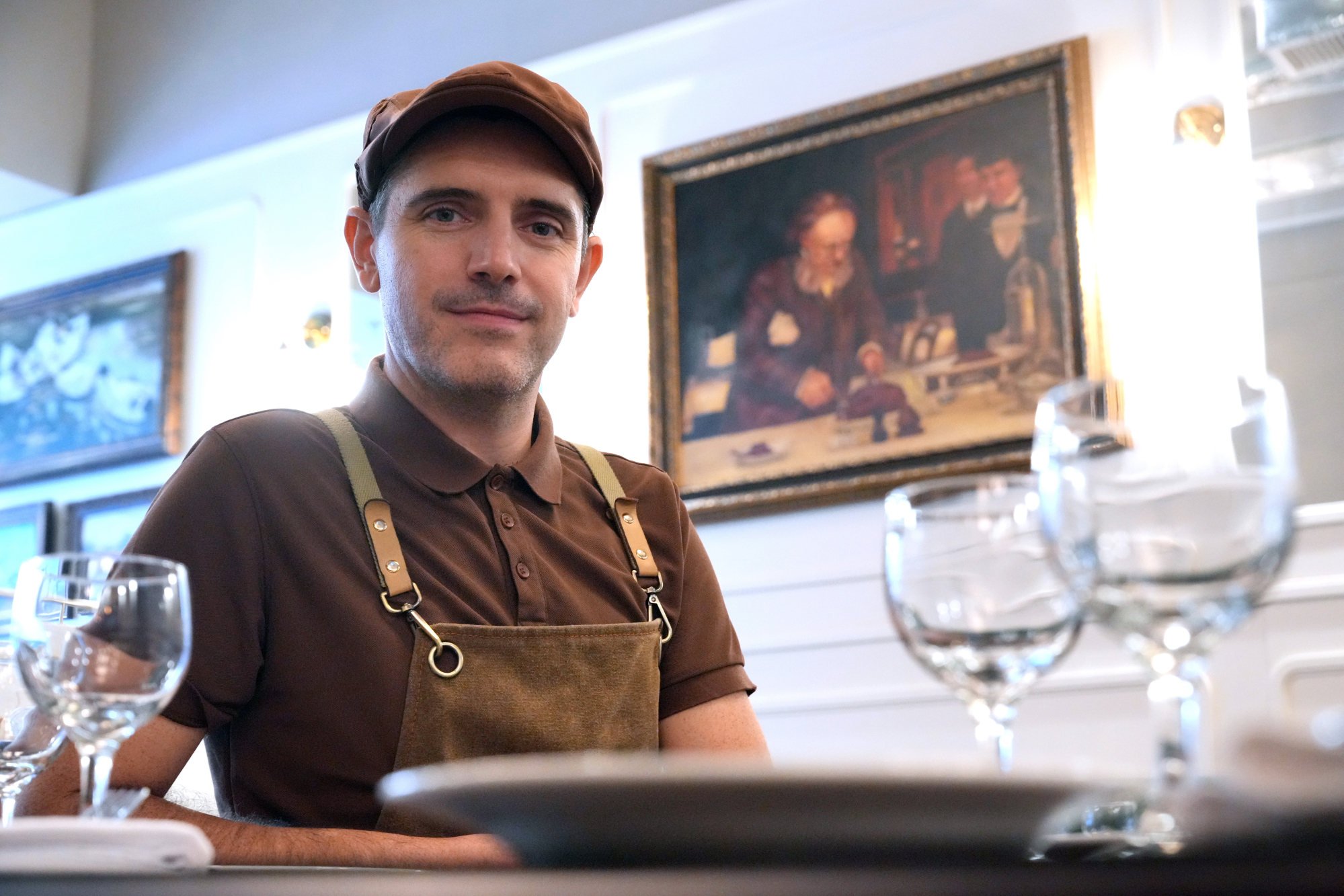
French restaurant Le Colvert, which opened in May in Sai Ying Pun and prides itself on a duck-only menu, was another looking to find the right balance for cost-conscious customers.
Its signature pressed duck dish, historically a culinary spectacle found only in luxury hotels and fine-dining restaurants, was priced at HK$2,688 for four people.
While by no means “cheap” for many diners, the restaurant also offers a rotating menu of dishes including a slow-cooked caramelised duck leg priced at a more modest HK$248.
Alfred Lo, a banking professional in his thirties who was enticed by Instagram posts about the restaurant, dined there on a Wednesday evening with a friend for the first time. They spent about HK$550 on food each, which Lo said he felt was competitive and in line with other French restaurants he had been to in the city.
Gambling on the right theme
Luring customers with a focus on specialising in one type of food is just one of the theme-heavy approaches that restaurateurs are using to stay afloat.
Riding on the city’s craze for Japanese manga Chiikawa, restaurant operator Flames Concepts decided to open its first ramen shop outside Japan earlier this month by teaming up with a department store chain from the country, Parco.
Chiikawa Ramen Buta, located inside the Langham Place shopping centre in Mong Kok, offers 87 seats and is larger than the four existing branches in Japan.
An exhibition launched at the start of the month, “Chiikawa Days”, has helped fuel the craze around the manga in the city. The name of the mouse-like titular character, created by artist Nagano, means “small and cute” in Japanese.
The new ramen eatery is decorated in Instagrammable red and yellow backdrops that feature various characters.
Willie Hu, co-founder of Flames Concepts, said he aimed to provide a “unique dining experience” for fans.
“I don’t think the current business environment means no opportunity. We just need to offer something very different and unique,” Hu said.
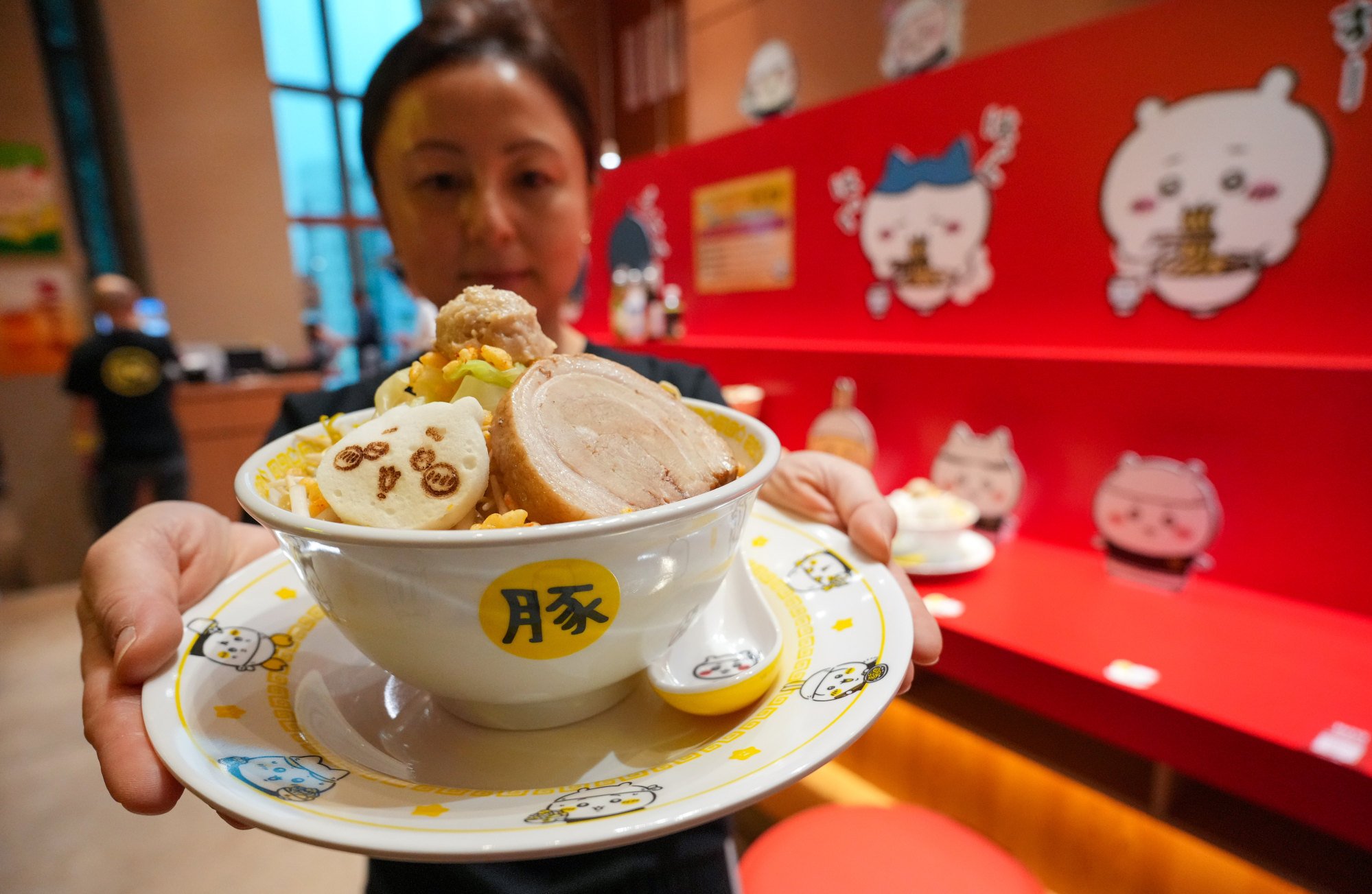
Daijiro Hirose, manager of licensing business development at Parco, added: “We see there is a huge fan base for the Chiikawa manga in Hong Kong and we want to bring a similar experience from Japan here.”
The restaurant is offering dishes named after the characters Chiikawa, Hachiware and Usagi, which are priced at HK$115 (US$15), HK$135 and HK$150, respectively.
Demand was so strong that most slots for the first month, from August 16 to September 15, were fully booked. Reservations for the second month were due to be opened two weeks in advance.
Diners were waiting on average 10 to 30 minutes for a spot inside the eatery on Monday, just its third day of operation, as some arrived earlier than their booking slots to browse merchandise and soak up the atmosphere.
But most said they were more interested in Chiikawa than the food on offer.
Ron Ngai, a 30-year-old who is currently unemployed, spent HK$1,100 on merchandise, including tableware.
“The taste of ramen is very average. But we didn’t have high expectations either since we saw some negative comments about the Japanese version,” Ngai said.
“I just wanted to come here to buy the merchandise. The goods are very cute and seem to be of good quality.”
Some fans ordered the largest and most expensive bowl, named after their favourite character, Usagi, but were unable to finish the meal.
Another diner, Audrey Hu, a 27-year-old working in business development who was visiting from Guangzhou, said the taste was already “much better” than the Japanese version.
She made a day trip to Hong Kong specifically to visit the ramen restaurant, as she could only reserve a spot at 3.20pm on Monday with her friends.
“I like the staff’s service; they introduced the characters while serving the food and answered our questions,” Hu said.
This focus on service is crucial, no matter the restaurant’s concept, according to Professor Lee Shu-kam of Shue Yan University’s department of economics and finance.
He called on restaurants to focus on providing more convenience to customers and placing an emphasis on service.
“If Hong Kong restaurants continue to stick to old-fashioned ways full of restrictions, diners won’t like it. They will go to mainland China or abroad to enjoy better service,” he said.
“These challenges are forcing the catering industry to prioritise innovation and reflect on their service attitude, focusing on how to put customers’ feelings first.”
For Le Colvert owner and chef de cuisine Guillaume Sejourne, serving only duck dishes was “definitely a way to stand out” among the numerous French restaurants in the city.
The restaurant can seat 45 diners and it was booked beyond capacity on a recent Tuesday when the Post visited.
“We wanted to have a very strong identity and we made a strong choice to represent ducks, not a drop of beef, not a drop of fish,” said co-owner and restaurant manager Hubert Dubouix, who sources the birds from the southwest of France.
Sejourne’s experience at the Peninsula hotel and Dubouix’s at the Mandarin Oriental had helped them with running their first restaurant, the pair said, with the latter adding that more than half of the wait staff had come from the two hotels.
The pair have gone all in on the theme, incorporating duck paintings and ornaments throughout the space. They have invested more than HK$1 million to open the restaurant and hope to recoup the sum with extra as a buffer by the end of the year.
Lo, the diner at the restaurant, said the duck concept had piqued his interest.
“We enjoyed both the classics like the pate en croute and also a less commonly seen dish in Hong Kong like the duck bouillon,” he said.
Still, Sejourne admitted that going heavy on a single theme was risky.
“It makes it a little gamble, a little risky,” he said. “It is a challenge, but the good thing about Hong Kong is that people in general are very enthusiastic about newcomers. We believe if we have an attractive concept, people will come and try.”



