




SINGAPORE (SCMP): Ten years ago, the English-language world witnessed a small milestone in a larger jubilee.
At Singapore’s 50th National Day celebrations on August 9, 2015, the unthinkable came to pass. In the National Day parade section themed “Identity – Uniquely Singapore”, alongside floats of Singaporean food, there were props depicting words from Singapore English, also known as Singlish, such as the particles “lah” and “leh” and phrases including “blur like sotong”.
Lee Hsien Loong, Singapore’s prime minister at the time, posted on his Facebook account a week after: “I’m glad that at 50, we are less ‘blur like sotong’, and more confident and comfortable with everything that makes us Singaporean.”
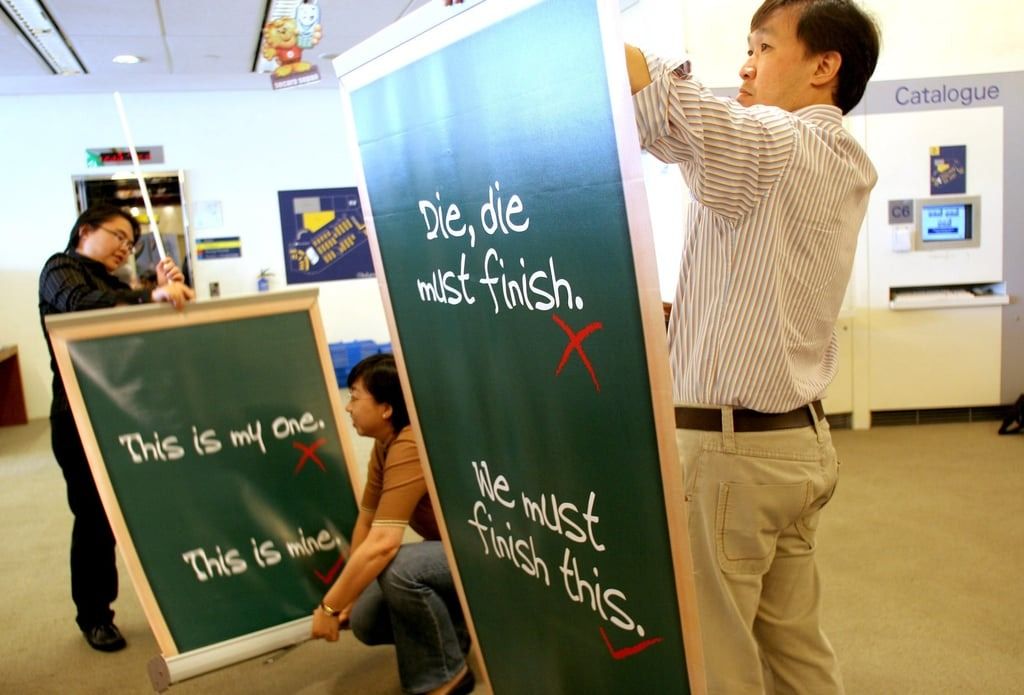
This was not trivial. Such official endorsement was particularly significant in light of Singapore’s official language policy and planning, which includes the annual Speak Good English Movement (SGEM) that, since 2000, has explicitly discouraged the use of Singlish in favour of “Good English”.
The following year saw another milestone, this time extending beyond the nation’s shores.
The Oxford English Dictionary (OED), aiming to widen geographical coverage and reflect the identities and experiences of multicultural anglophone populations, added 19 Singapore English items in May 2016, as well as 13 Hong Kong English items.
This and continuing inclusions over the years of numerous entries from World English varieties have been both enthusiastically applauded and widely debated.
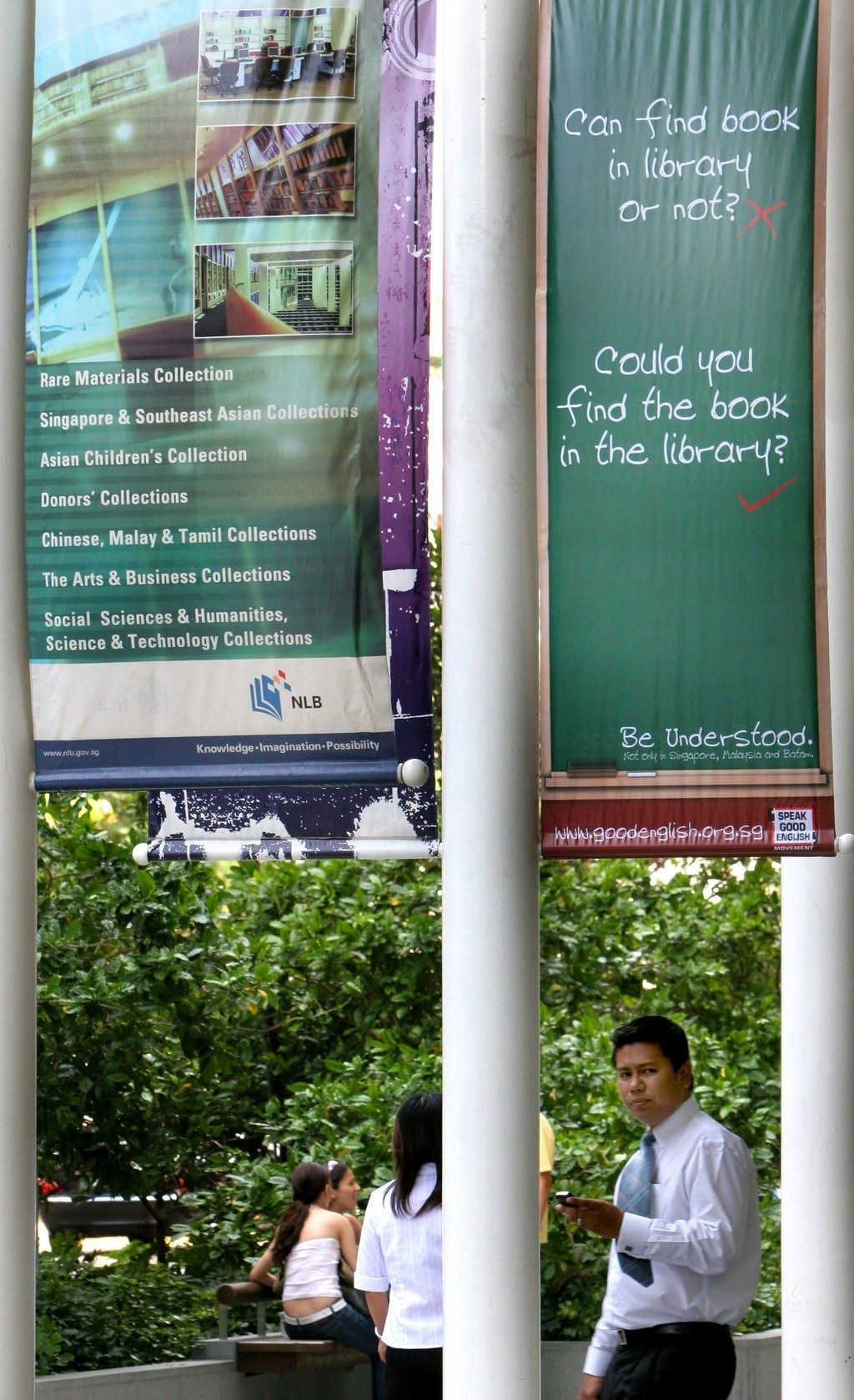
Fast forward a decade and Singlish has become a given in the national landscape and discourse, positioned not as an unusual selling point but as a fundamental element of the Singaporean identity.
The government’s stance on Singlish has evolved to be more linguistically nuanced. SGEM 2022 included a TikTok campaign on code switching – the practice of using different language varieties across situations or within a conversation, depending on interlocutors, formality, and intent.
This signalled the government’s acknowledgement of the place of Singlish alongside standard English in Singaporeans’ multilingual repertoires.
This year, Singapore’s 60th National Day is celebrated throughout the month of August with exhibitions, events, and offers. Singlish features not just in mementos marketed by indie brands, but is, this time around, mainstream.
Long-established English furniture retailer Courts, for example, produced a series of Singlish stickers featuring its products paired with Singlish terms: a standing fan mutters buay tahan, and a sofa relaxes with lepak.
Hotels and restaurants offer shiok deals of a makan sesh of local dishes, for dining in or dabao-ing home. The fact that I have not put such Singlish in quote marks, nor explained it, is deliberate, recognising its status as part of an official language.
Crucially, Singlish is used beyond playful paraphernalia and retail marketing, and is encompassed in narratives by state institutions, both informal and formal.
State-owned media conglomerate Mediacorp has featured broadcasters, and local celebrities and sportspeople, revelling in Singlish.
The National Heritage Board’s National Museum is hosting a Pictionary-style contest using Singlish phrases, called “Can Draw Anot”, with a full-on Singlish blurb: “Eh, you got family or friends good at drawing anot? The top two winning teams will walk away with shiok prizes. Confirm plus chop will be fun!”
In a more formal domain, the National Museum’s commemorative showcase of Singapore’s journey, using National Collection artefacts, highlights the emergence of Singlish and its inclusion in the OED, cementing Singlish’s place in the nation’s 700-year history.
The evolution and vitality of a language variety lies in the spontaneous and sustained use by its community. To clarify, World English items are documented in the OED as a consequence of their having currency, not the other way around. A misconception is: now that it is included in the OED, it is a “real” English word, so I can use it!
Such recognition nonetheless contributes significantly to greater awareness, intelligibility, acceptance and confidence. Even more critical is a state’s recognition and representation in policy, education and public life.
This applies not just to English varieties, but – importantly – to minority, indigenous and endangered language varieties. These comprise important actions towards promoting diversity, inclusion and sustainable development.
To this, we say: add oil! -- SOUTH CHINA MORNING POST


