




A proposal to tighten regulations covering Hong Kong’s notorious loan sharks is too narrowly focused and will not tackle the root of the problem of unruly debt collectors, according to lawmakers and legal experts.
The legislators and specialists criticised the Financial Services and the Treasury Bureau’s plan to set a cap on borrowing activity for low-income earners and impose stricter rules for loan “referees”, saying it failed to tackle the shadowy network of intermediaries who enabled predatory lending.
The bureau is seeking public feedback until August over proposals to tie unsecured personal loans to a borrower’s income, either through an aggregate loan cap or a debt servicing ratio. It has also floated the idea of banning the use of referees altogether to stop the widespread harassment of third parties.
“Harassment is against the law, but harassment happens every day,” lawmaker Michael Tien Puk-sun said. “People wonder if there is lawlessness in Hong Kong.”
At a Legislative Council meeting on Monday, the government said the Companies Registry had received 725 complaints about moneylenders in the past five years. Referrals to police were made in 509 of the cases, which authorities said showed the need for tougher regulation.
Last year, the registry received 214 complaints, conducted 561 inspections and issued 22 warning letters. These included 58 complaints involving domestic helpers, of which 18 directly concerned moneylenders harassing loan referees.
The names of referees are generally provided by a borrower to lenders when taking out a loan. Legally, a referee cannot be held liable for a loan and must provide written consent to be listed. But in practice, debt collectors are known to hound them to put pressure on the actual debtor.
Tien called for a system where bad debt collection behaviour caused moneylenders to have their licences suspended, also suggesting authorities create a blacklist of domestic helpers who had a history of borrowing irresponsibly.
Legislator Bill Tang Ka-piu, who has followed the issue for years, said the consultation paper was too focused on domestic helpers.
“The consultation paper’s content only deals with the problem of domestic helper loans, but it does not deal with the problem of financial intermediaries, which is also very serious and has not been properly addressed,” he said.
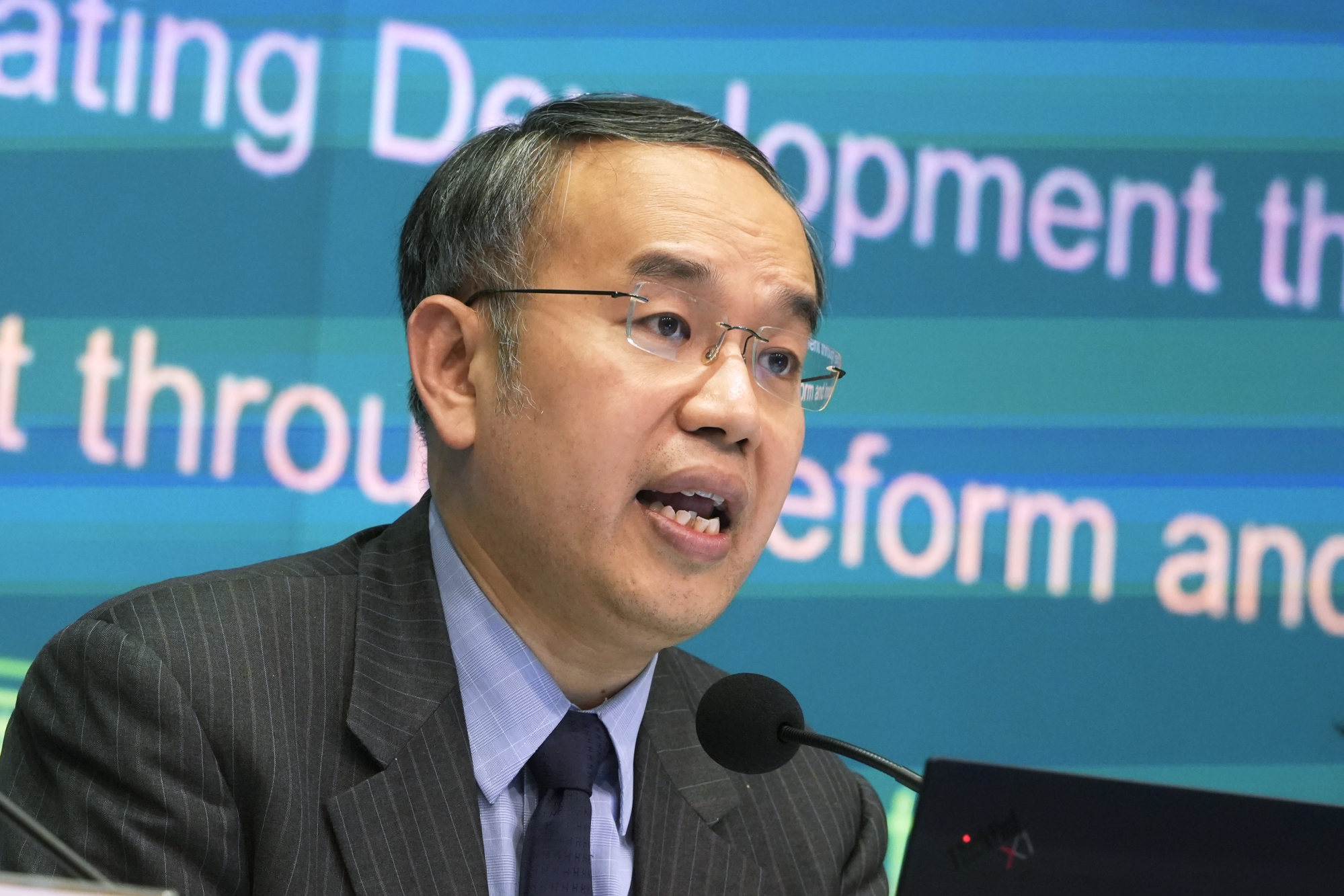
Secretary for Financial Services and the Treasury Christopher Hui Ching-yu said the government had to manage a “balancing act” between risk and financial inclusion.
Hui acknowledged the problem of “information asymmetry”, in which lenders had little information on borrowers’ financial details, such as their existing debts.
He said the government was encouraging all lenders to join the Credit Data Smart platform, which provided consumer credit references, to get a better picture of borrowers’ debts.
But Hui conceded that mandating its use for all players posed a challenge due to operating costs, particularly for smaller lenders.
Tang said Hong Kong was too “lax and liberal” in regulating debt collection, which created a “vicious cycle” where lenders granted high-risk loans because they knew they could use aggressive tactics to force borrowers to pay the money back.
The offering of high-risk loans involves licensed lenders disbursing a loan on paper, with agents immediately clawing back a large cash “commission” of 15 to 30 per cent. This illicit fee, when factored in, sends the effective interest rate soaring far beyond the legal 48 per cent cap, but allows the lender to maintain a facade of legality.
“The intermediary just allows the finance company to evade legal responsibility,” Tang said. “This is the loophole that allows the old [loan shark] tactic to happen. It should be strictly cracked down on.”
Bobby Tan* and his wife Alicia* are among those who have found themselves being hit with hefty interest rates through underhanded tactics.
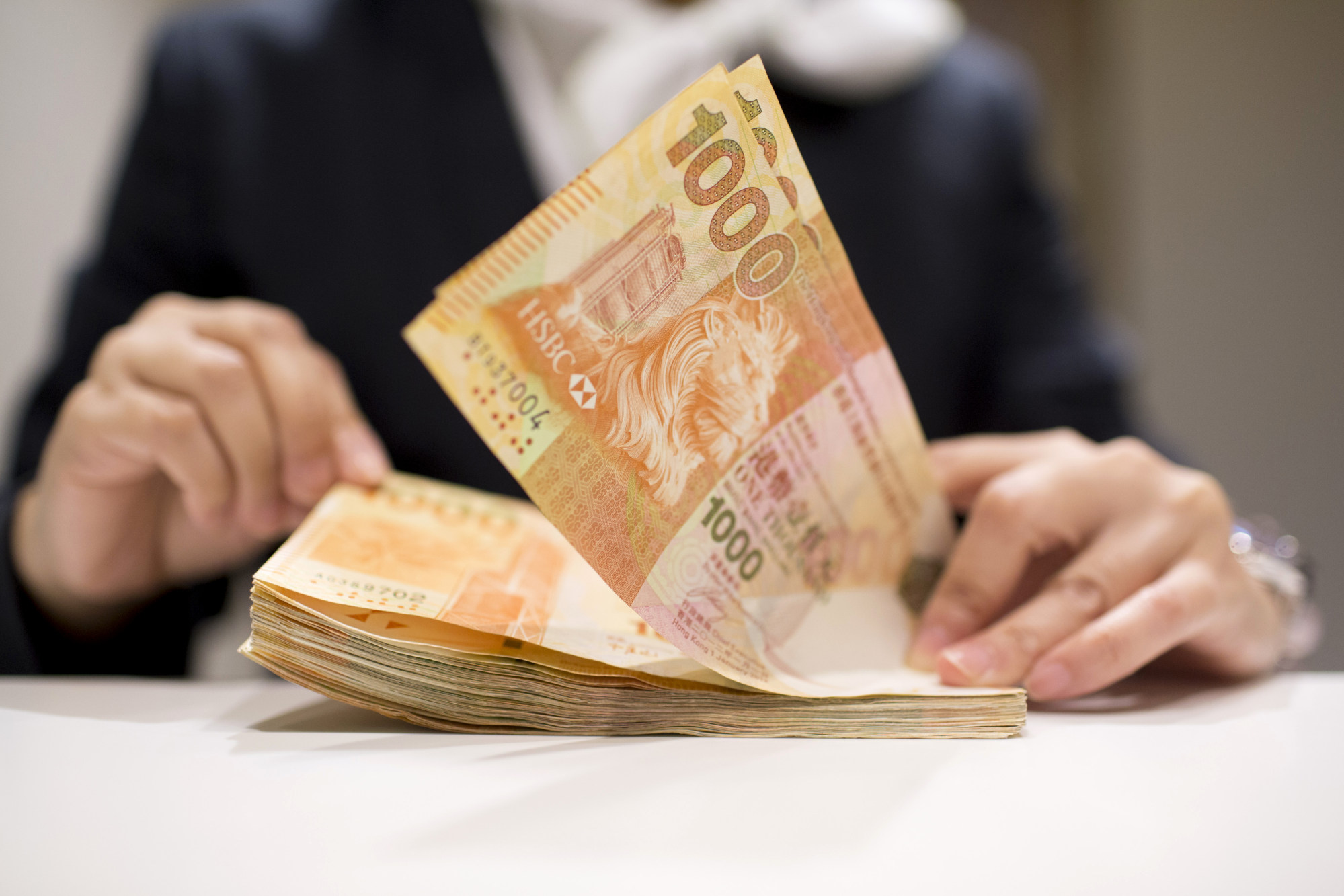
Tan, who was unfamiliar with loan sharks and how their intermediaries worked, borrowed HK$5.05 million (US$643,290) from 30 licensed small lenders, obtained only HK$4.15 million after deducting commissions and expenses, and had to pay an effective rate of 1,031 per cent.
The Money Lenders Ordinance puts a ceiling on interest rates at 48 per cent.
Lawyer Lau Kar-wah, who has represented dozens of victims, called for lowering the ceiling to 36 per cent.
Lau also suggested requiring licensed lenders to hold a minimum capital of HK$10 million to prevent them from being shell companies that simply declared bankruptcy when sued.
“Why can a finance company be established with just two dollars, but a bank cannot?” Lau said. “If they have HK$10 million or HK$20 million in assets, they won’t dare to act so recklessly.”
Jason Chan, convenor at the Association of Financing Industry Practitioners, urged Hong Kong to learn from Singapore’s practice of blocking the IP addresses of non-local lenders that targeted residents.
The city state has only 153 licensed moneylenders, just 7.5 per cent of Hong Kong’s 2,048 in May. Under its Moneylenders Act, Singapore imposes hard, income-based caps on how much an individual can borrow and makes it mandatory for all lenders to use a central credit bureau.
Its Debt Collection Act 2022 requires all individual collectors to be licensed, and the Protection from Harassment Act makes it a criminal offence to contact debtors outside stipulated hours or to engage in public shaming.
“In Singapore, creditors and lenders cannot call beyond a stipulated time – that’s a crime,” Tan added. “But in Hong Kong, it appears it’s a cowboy town. They can call and torment borrowers until they are happy.” - SOUTH CHINA MORNING POST



