
HANOI: With the significant benefits it brings, green growth in businesses will not only create sustainable drivers but also help Vietnam realise its commitment to achieving net-zero emissions by 2050.
However, the green transition in businesses is still incompatible and there are notable differences in its implementation.
A Vietnam Chamber of Commerce and Industry (VCCI) report says that a major concern is financing, with 65 per cent of businesses reporting financial difficulties in undertaking green projects.
Despite the existence of supportive financial mechanisms, channelling these funds effectively to the businesses that need them remains a complex issue.
Another worrying factor is personnel. Only about 12 per cent of businesses in HCM City possess a team with expertise in environmental, social and governance principles.
This lack of specialised personnel could hinder the effective implementation of green initiatives, says the report.
Technology presents a critical challenge, particularly in high-emission sectors like textiles. Approximately 40 per cent of equipment in this industry is outdated, making carbon emission reduction a daunting task.
As Vietnam competes in the international market, upgrading technology and meeting green standards become imperative for businesses to remain competitive.
Finally, business awareness is a substantial barrier. Not all businesses fully grasp the importance of green transition or are prepared to make the long-term investments required for this process. This can lead to a lack of proactive engagement and commitment to sustainable practices.
According to a report on the readiness and challenges faced by businesses in the green transition, conducted by the Private Sector Development Research Board (Board IV), 64 per cent of businesses admitted they were unprepared for this process.
The report also found that, among the 2,734 businesses surveyed, over 90 per cent were experiencing capital difficulties, with approximately half of those businesses struggling to mobilise funds for the green transition.
Despite a significant need for capital, Vietnam's green finance market is still developing slowly. The World Bank has estimated that Vietnam requires approximately $368 billion between 2022 and 2040 to build resilience and reduce greenhouse gas emissions.
This amounts to about 6.8 per cent of GDP annually, with the private sector expected to mobilise nearly $184 billion, or almost half of the total capital needed.

Policy frameworks needed
In reality, the scale of green credit remains limited. The total outstanding green credit across the entire system reached nearly VNĐ621 trillion by the end of 2023, accounting for about 4.5 per cent of the economy's total outstanding loans.
This was primarily concentrated in renewable and clean energy (nearly 45 per cent) and green agriculture (30 per cent).
Implementing green credit faces numerous hurdles, such as a lack of clear legal frameworks and compatible policies. The capital sources for credit institutions are mostly short- and medium-term, while green projects require long-term funding and preferential interest rates.
For green bonds, there is still a lack of detailed guidance on project criteria, mechanisms for monitoring capital use and transparent legal regulations.
Furthermore, accessing international financial sources, despite their significant potential, is not easy.
The Just Energy Transition Partnership is expected to allocate US$15.5 billion from 2024 to 2028 to support Vietnam in implementing energy transition projects.
However, most of this funding is only disbursed for projects that have not yet mobilised capital or are in the proposal stage.
International organisations have noted that the implementation progress of the partnership is slow, with many barriers related to admin procedures, appraisal, and compliance with international standards, which limit businesses' access to funds.
Therefore, according to Bui Thanh Minh, PhD, deputy director for Professional Affairs at the Office of Board IV, if solutions are not quickly found to remove institutional, capital and technical capacity bottlenecks, the green transition process for businesses, especially the domestic private sector, will be delayed.
This would undermine the effectiveness of national climate commitments and squander opportunities to access global financial resources, he said.
Nguyen Quoc Viet, PhD, at the University of Economics and Business (affiliated to the Vietnam National University, Hanoi), offered insights into the current state of green transition among businesses.
He noted that the capacity for transformation in terms of mindset, business models, and management personnel varied significantly from one enterprise to another. This disparity led to a lack of compatibility in green transition efforts across businesses, he said.
Furthermore, he pointed out that technology transfer was not easy in today's fiercely competitive global landscape.
A key challenge, he said, was that the institutional policies for green transition had not truly kept pace with the transformation needs of both the broader economy and individual businesses.
To untangle the knots in the green transition process for Vietnamese businesses, experts suggested that the immediate priority was to finalise compatible regulations, institutions and policies.
This would establish clear information and foster trust in the exchange between supply and demand sides, Viet added.
Tran Cong Thang, PhD, director of the Institute of Strategy and Policy on Agriculture and Environment, said that while businesses must proactively undergo green transition, the government should implement policies to support businesses that had successfully transitioned.
Additionally, there should be a clear development roadmap and incentives for businesses that were still struggling, he added.
Concurring with this view, VCCI Vice Chairman Nguyen Quang Vinh emphasised the need for the government to provide development orientations that align with Vietnam's context and conditions, enabling businesses to seize international market opportunities.
He highlighted the critical importance of increasing access to green growth capital for businesses, providing them with the financial resources needed for green transition.
Moving towards net zero
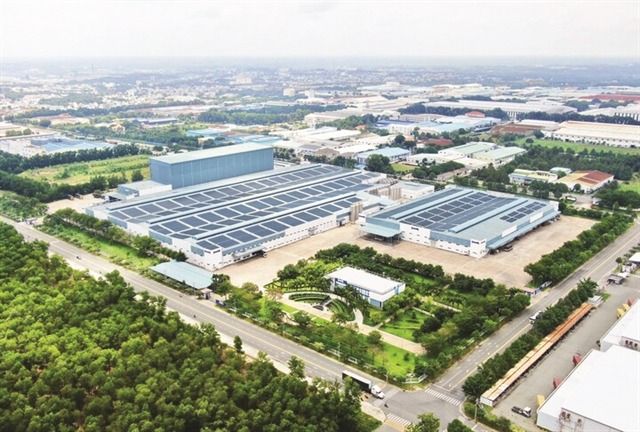
Another necessary solution to encourage the green transition is to focus on building and diversifying incentive policies for businesses that invest in advanced and clean technology, consume less energy and resources, have low emissions and are eco-friendly.
Sustainable development is now deemed a mandatory requirement for Vietnamese businesses aiming to expand into the global market.
This is because goods exported to major markets often demand environmental and carbon certifications. In new-generation free trade agreements, environmental protection and low emissions are binding commitments.
A significant shift will occur as the European Union implements the Carbon Border Adjustment Mechanism for products like iron, steel, aluminium, cement, and electricity.
To export these products to the EU market, businesses will have to declare their emissions. If businesses or EU importers do not implement corresponding emission reductions, importers of goods under the scope of the mechanism will be required to purchase certificates.
Therefore, related commitments should transition from being encouraged to become mandatory, said Nguyen Dinh Tho, PhD, director of the Institute of Strategy and Policy on Natural Resources and Environment.
This would ensure that businesses can survive and adapt to the rules of international trade, he added.
The energy transition is not only an international commitment, but also an opportunity for Vietnam to build a low-carbon economy and become more competitive in the global supply chain.
The country aims to achieve a GDP growth rate of over eight per cent this year, setting the stage for double-digit growth from 2026 to 2031.
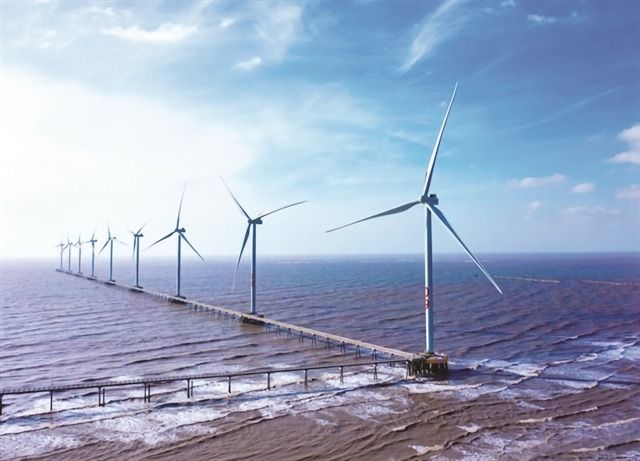
The Government approved the revised Power Development Plan VIII in April this year, setting the target to increase the share of renewable energy, excluding hydropower, to 28-36 per cent by 2030 and 74-75 per cent by 2050.
The plan reflects the commitment to developing green energy, building a flexible power system and integrating advanced technologies to optimise efficiency.
The total installed capacity of renewable and clean energy sources in the country reached 29,180 MW as of December last year, accounting for approximately one-third of the total installed capacity of the entire system.
The shift from fossil fuels to renewable energy sources was a fierce race among countries aiming for sustainable development in the future, said Nguyen Duc Thanh, deputy editor-in-chief of the Lao Dong (Labour) newspaper, at a recent panel discussion on solutions for the energy transition towards net zero.
Vietnam's Party and State had recently implemented a series of policies that demonstrated their commitment to energy transition and renewable energy development, he said.
These policies had established a solid legal framework for businesses to implement green transformation and transition to green energy use. However, despite the achievements made, the development of renewable energy in Vietnam still faced many challenges and obstacles, he added.
Numerous projects had been delayed or put on hold due to complex administrative procedures, lack of funding, insufficient technology, and unclear investor benefits, he explained.
To successfully transition to green energy, many opinions suggested that Vietnam needed to reform its institutions, master technology, attract both domestic and international investments, and enhance monitoring and management capabilities.
Doan Ngoc Duong, deputy director of the Department of Electricity and Renewable Energy, the Ministry of Industry and Trade, said that in the near future, it would be essential to create a transparent and open investment environment, eliminate barriers related to investment procedures in power development.
Additionally, the energy transition could not occur without a smart and flexible power grid, Duong said.
It was crucial to accelerate investment in strategic transmission lines and modernise the power grid with digital and smart technologies to optimise the utilisation of renewable energy and new energy sources across the country, he added.
Another important solution mentioned by the Ministry of Industry and Trade representative was the need to implement energy transition in key electricity-consuming sectors, consider the role of nuclear power in the long term and establish a modern electricity market and policy framework. - Vietnam News/ANN