
BANGKOK: Suchinda Kraprayoon (pic below), an army commander in Thailand who in 1992 followed the South-East Asian nation’s tradition of military strongmen assuming the reins of government, died Tuesday (June 10) at age 91, the state Thai News Agency reported.
Suchinda, who served just under seven weeks as prime minister, became one of the country’s most reviled politicians after the military used lethal force to quash protests alleging he took office by undemocratic means. The episode became known as "Black May.”
The violence, during which 52 people were killed according to an official count, ended only when the country’s revered monarch, then-King Bhumibol Adulyadej, summoned Suchinda and protest leader Chamlong Srimuang for a scolding on a live television broadcast.
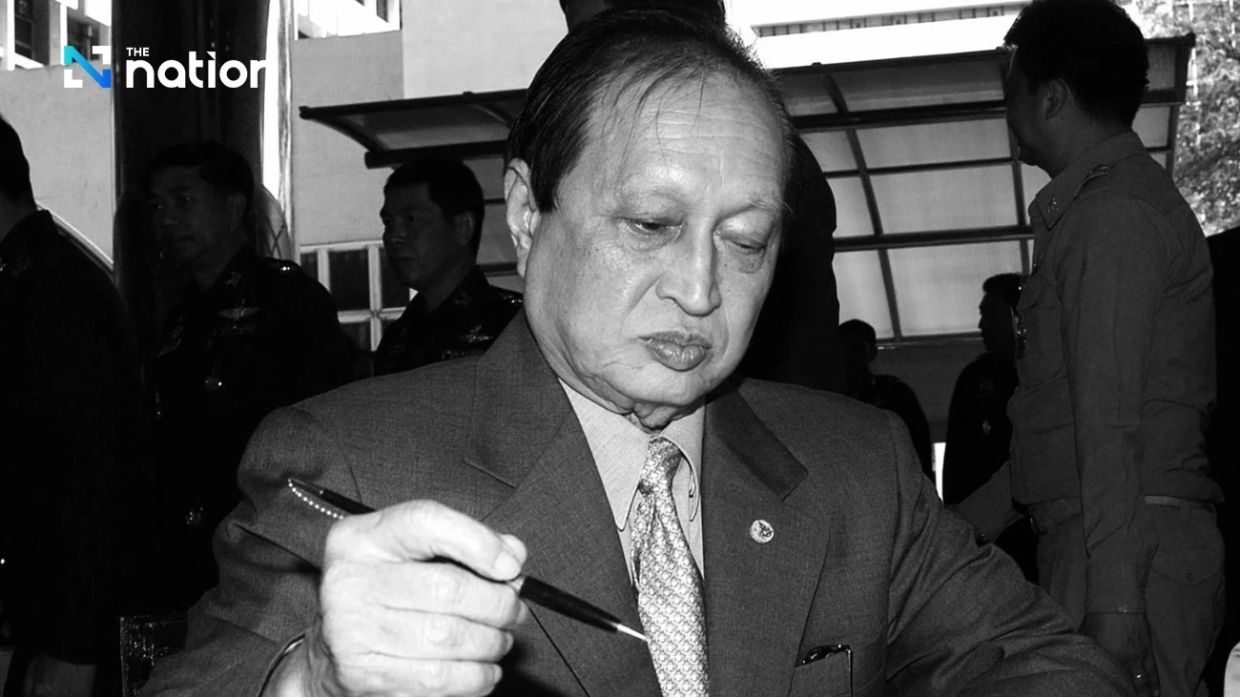
Suchinda stepped down and exited politics, living generally out of the public eye. He was respected by fellow officers and named chairman of a major Thai telecoms company.
He began his military career by attending Chulachomklao Military Academy, Thailand’s West Point, and did two study tours in the United States. He served a stint in a Thai unit supporting the US war effort in Vietnam and was an assistant military attache in 1971 at the Thai Embassy in Washington.
A 1985 appointment as assistant chief of staff for operations put him on track to be appointed army commander, which he achieved in March 1990.
He then rose to become prime minister a year after leading a February 1991 coup ousting the elected government of Chatichai Choonhaven, whose ruling coalition was dubbed the "buffet Cabinet” because its members were seen as feeding on the spoils of power.
Although Suchinda was one of four deputy leaders of the junta that took over, he was arguably more influential than its official leader, Gen. Sunthorn Kongsompong. The junta got credit for appointing qualified technocrats to serve in its interim Cabinet and for holding an election in March 1992.
Five parties that won a majority of seats nominated Narong Wongwan, a wealthy businessman and member of Parliament, to be prime minister. His nomination was withdrawn after the United States caused a controversy by saying it had refused him a visa because of suspected links to drug trafficking.
The five parties then selected Suchinda as their candidate, and he became Thailand’s 19th prime minister.
A protest movement immediately took hold and grew rapidly. The confrontation escalated into violence by May 17, with running street battles, the burning of public property and troops opening fire on unarmed protesters.
When King Bhumibol on May 20 summoned Suchinda and his main critic Chamlong to tell them to end the violence, Suchinda’s position became untenable. After the king signed an amnesty covering both sides in the conflict, he resigned. - AP