
China’s Tiandu-1 satellite has entered a critical fuel-efficient orbit that synchronises with the motion of the Earth and moon, but claims that it is the first spacecraft to achieve the feat have been challenged by US and Canadian experts.
The 3:1 resonant orbit – in which Tiandu-1 completes three loops of the Earth for every circuit made by the moon – is seen as a breakthrough for lunar infrastructure, including a BeiDou-like guidance system that will be needed for interplanetary exploration.
Developer Deep Space Exploration Laboratory said that “the Tiandu-1 navigation test satellite successfully carried out a key manoeuvre at perigee [the point in orbit when it is closest to Earth] on May 22 and precisely transitioned into a 3:1 Earth-moon resonant orbit”.
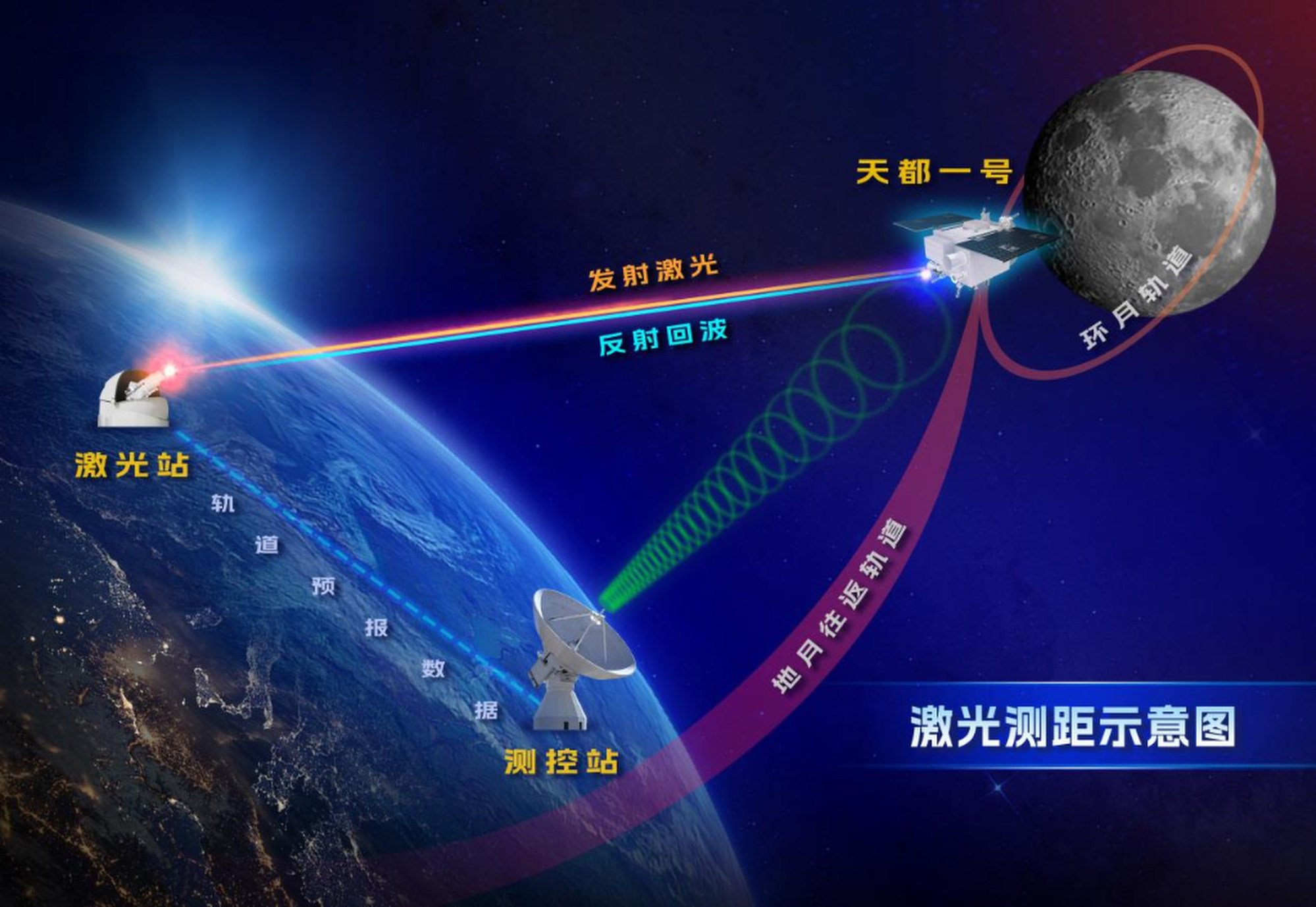
“This made Tiandu-1 the first spacecraft to enter a round-trip 3:1 Earth-moon resonant trajectory,” according to a statement on the website of the laboratory based in Hefei, Anhui province in central China.
“Its flight data will provide support for advancing technologies such as orbit maintenance, control, and autonomous navigation in complex gravitational environments.”
Experts in the US and Canada immediately challenged the claim, pointing to Nasa’s 15-year-old Interstellar Boundary Explorer (IBEX) probe that entered a near-identical orbit in 2011, where it continues to operate.
Jonathan McDowell, a Harvard astronomer and space historian, and Canada-based amateur stargazer Scott Tilley both said it was debatable whether Tiandu-1 could lay claim to the title, with the IBEX craft’s achievement of near 3:1 resonance.
“Yes, indeed Tiandu-1 has entered a 3:1 resonance orbit. Whether it’s the first is debatable...IBEX launched in 2008 uses a similar orbit,” Tilley said.
According to McDowell, the advantage of resonant orbits is that they allow a spacecraft to operate far from Earth while avoiding the unpredictable, chaotic motion caused by frequent lunar fly-bys. “The resonance provides stability,” he said.
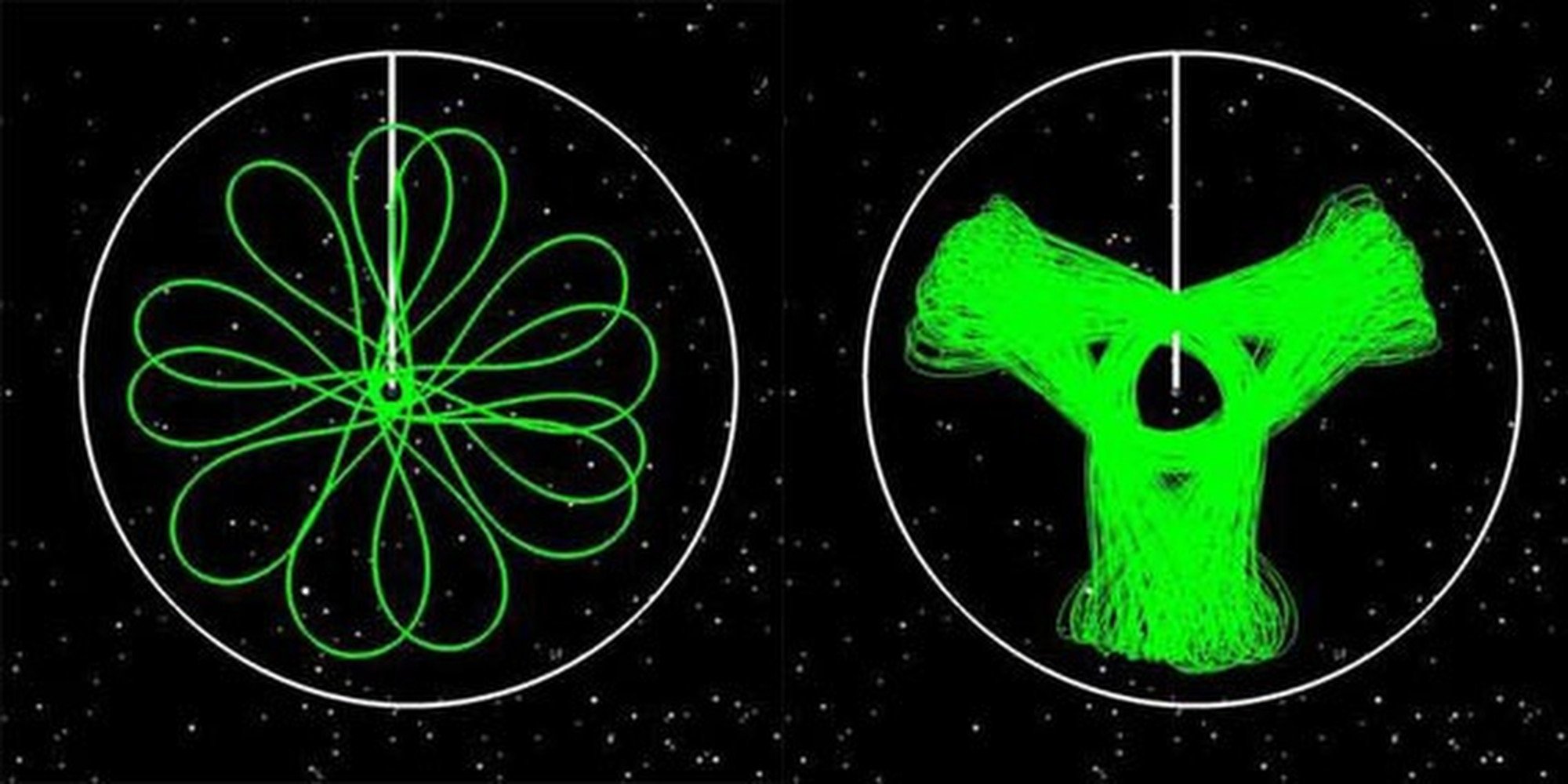
In a 3:1 resonance, the 61kg (135lb) Tiandu-1 – which launched alongside the Queqiao-2 lunar relay satellite last year – completes each petal of its three-lobed orbit around the Earth roughly every nine days – the same amount of time it takes the moon to complete one.
In April, state news agency Xinhua reported that China’s DRO-B satellite had departed lunar orbit, after helping to establish the “world’s first three-satellite constellation in cislunar space”, and entered an Earth-moon resonant orbit.
DRO-B, a 277kg Chinese satellite that was salvaged after being stranded in the wrong orbit due to a launch mishap last year, is currently in a 3:2 Earth-moon resonant orbit, according to Tilley, who is best known for helping Nasa to find its long-lost IMAGE satellite in 2018.
The Canadian amateur astronomer, who tracks satellites in his spare time, said he noticed that DRO-B had vanished from its known lunar orbit more than a month ago and began searching for it.
Using graphics and research papers, Tilley modelled a 3:2 resonance orbit – one that tours the gravitational balance points between Earth and the moon known as L3, L4, and L5. After an exhaustive search, he spotted DRO-B in such an orbit.

DRO-B completes three circles around Earth in the time it takes the moon to complete two. The satellite traces a broad, triangular loop with lobes near the L3, L4, and L5 points, which it swings past roughly every 18 days.
“DRO-B is not transmitting all the time like it used to, and it’s likely [to be] having minor power issues as its solar panel supports were damaged during the launch mishap,” Tilley said.
He added that DRO-B’s orbit was especially notable because this specific class of 3:2 resonance orbit had never been used before. “Japan’s Hiten lunar probe did visit some of these points, but didn’t use a 3:2 resonance orbit.”
According to Tilley, China’s use of these orbits seemed to be all about testing navigation-related technologies. “Having a system that covers the entire Earth-moon system for orbital determination and positioning would be very helpful,” he said. - SOUTH CHINA MORNING POST