
Pop Mart, the company behind the hit collectible character Labubu, was virtually unknown outside mainland China before 2024, but now some analysts are comparing its success to that of Sanrio and its Hello Kitty property, suggesting that the Beijing toymaker could have created a new playbook for cultural exports.
Labubu, a sharp-fanged but cute little monster that is often sold as a plush clip-on charm for handbags, has attracted high-profile fans including the family of football star David Beckham. Its popularity pushed Pop Mart’s Hong Kong-listed shares to a record high of HK$234 last week, after the company’s market capitalisation topped HK$300 billion (US$38 billion) the week before. The rally followed the April debut of the Labubu 3.0 series, which drew long queues in London, New York, and Dubai.
“For years, there’s been a push [for Chinese companies] to ‘go global’ by exporting heritage and storytelling,” said Chris Pereira, founder and CEO at iMpact, a brand consulting company in Singapore. “But Labubu flips that script. It’s not trying to explain China, it’s just trying to be lovable.”
The sustained hype around Labubu had “great similarities” to Hello Kitty, which turned 50 last year, according to JPMorgan Chase. The US bank said that beyond common traits in character design and business model, Labubu was also catching up with Hello Kitty in areas such as merchandising, licensing and Google Trends search interest.
With international sales surging more than 480 per cent year on year in the first quarter, led by increases of 900 per cent in the US and 600 per cent in Europe, Pop Mart has become a new favourite among investors.
Pereira said the popularity of the intellectual property (IP) opens the door for a wave of Chinese brands to succeed not because they are about China, but because they tap into universal emotions through strong design and clever marketing. “They are telling a successful Chinese story without ever mentioning China,” he said.
JPMorgan Chase initiated coverage of Pop Mart last week with a rating of overweight, and set its price target at HK$250 – the most bullish prediction among 43 analysts covering the toymaker.
“Labubu’s meteoric rise is driven by a combination of factors,” said Richard Lin, chief consumer analyst at SPDB International, a Hong Kong-based investment bank. “This includes the scarcity of the product itself, which has fuelled spontaneous social-media promotion by those lucky enough to get their hands on the toy” – a form of conspicuous consumption, he noted.
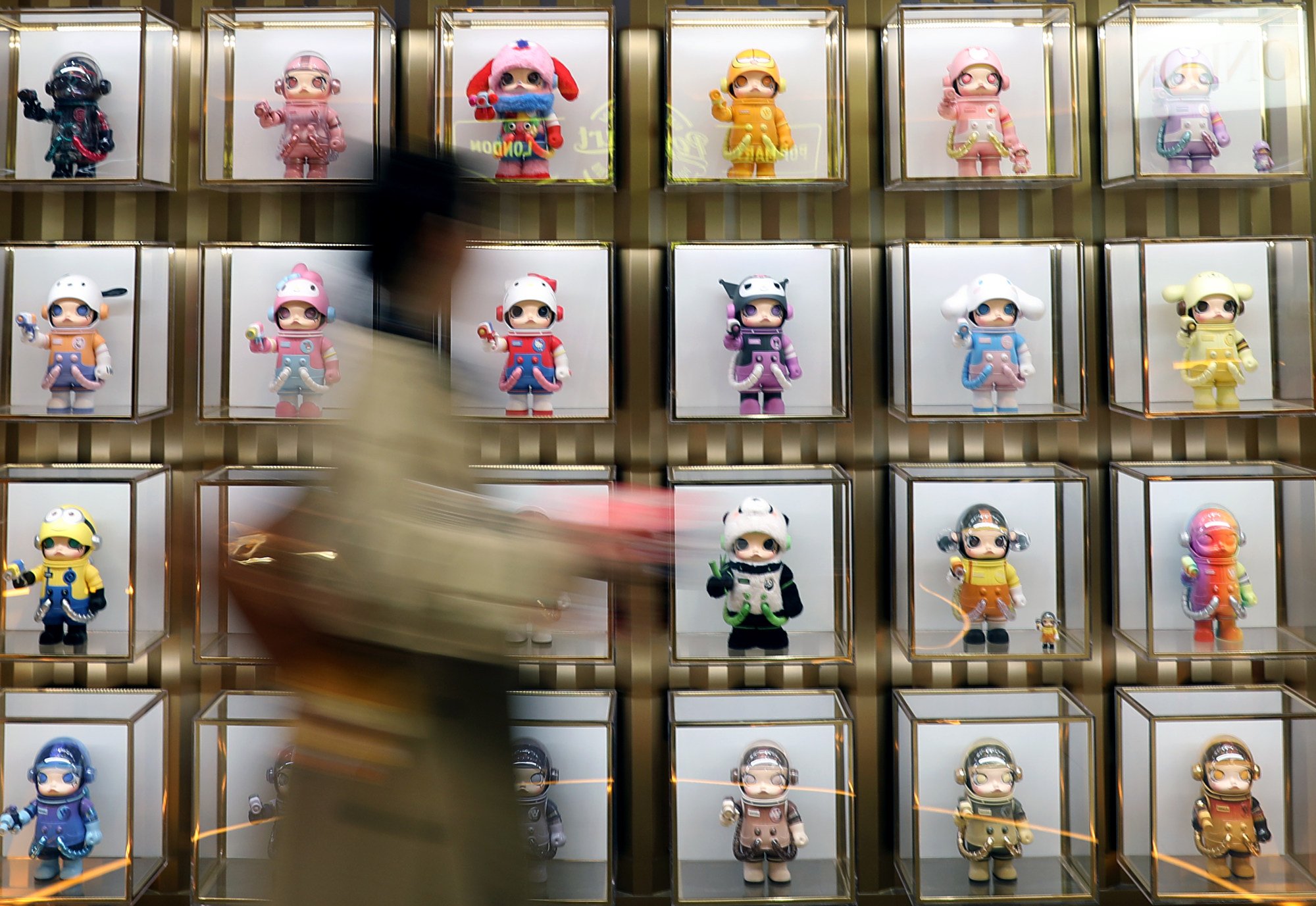
Moreover, the character appeals to global consumers with its “mischievous, cheeky image” that fans find irresistible, he said.
“I think this kind of vibe stands out more compared to something like Hello Kitty,” Lin added. “In today’s context, Hello Kitty might not resonate as much with younger audiences, who tend to look for characters with more individuality and edge.”
With Pop Mart’s shares rising nearly tenfold over the past year following Labubu’s surge in popularity across Southeast Asia, JPMorgan is bullish on the company’s long-term growth prospects. The bank identified “multiple potential sources of incremental earnings,” ranging from new super IP launches and licensing to stationery, jewellery and even theme parks.
“Labubu’s success is really a reflection of Pop Mart’s own strengths in operations, marketing and product development,” said SPDB International’s Lin. “So what people can have confidence in is that even if Labubu cools down today, there will be new IPs coming tomorrow.”
That sentiment is not universal, however. As stunning as Labubu’s success has been, it has decades to go to match Hello Kitty’s staying power, and whether the company can nurture other hit products is an open question.
“We think the biggest uncertainty lies in the relevance of Pop Mart’s IPs, as they may become less popular among global pop-toy fans over the next few years,” said Jeff Zhang, an equity analyst who covers Pop Mart for Morningstar. “Additionally, Pop Mart might overexpand in regions where demand for its products is weaker and see less operating leverage as a result.”
Sanrio, the Japanese company that owns the Hello Kitty and Kuromi IPs, has returned investors a total 646 per cent, including share price gains and dividend payouts, since its listing in 1982. Pop Mart has returned 488 per cent so far.
Additional reporting by Zhang Shidong - SOUTH CHINA MORNING POST