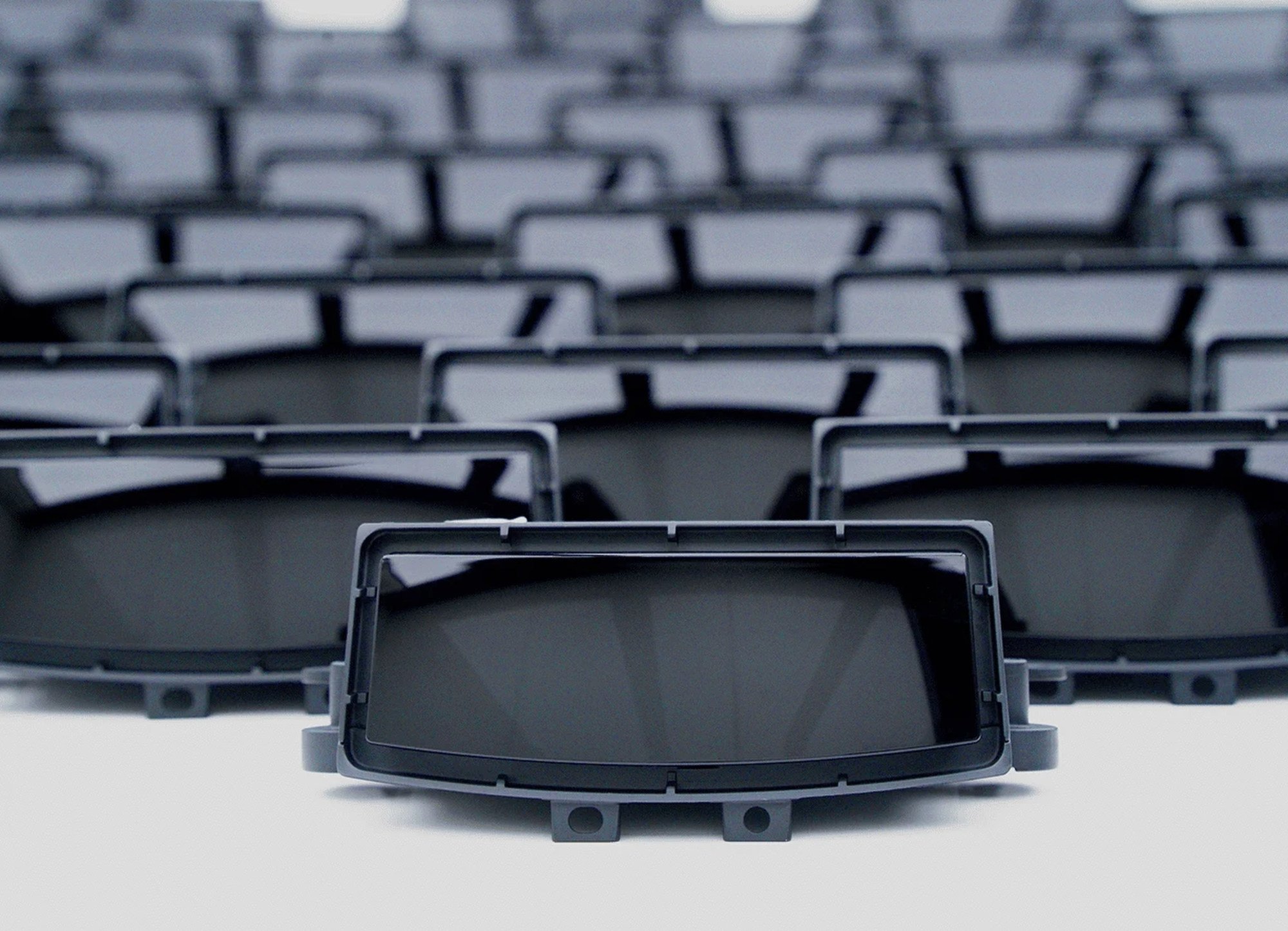
China’s Hesai Group, the world’s largest maker of automotive lidar sensors, plans to open its first plant outside the mainland in Southeast Asia next year.
Chief financial officer Andrew Fan said on Wednesday the Shanghai-based company recently signed a land lease for the factory, with construction set to start later this year and production in late 2026. He did not give details.
The factory will supply light detection and ranging sensors – which employ laser beams to measure distances to objects – to international marques that design and assemble smart vehicles, he added.
“From the end of 2026 or early 2027, Hesai will rely on the plant in Southeast Asia to serve some of our international clients,” Fan said. “We are building overseas plants to implement our go-global strategy.”
The company’s announcement came after Hesai on Tuesday reported a 46.3 per cent jump in first-quarter revenue to 530 million yuan (US$73.6 million), while its net loss narrowed 84 per cent to 17.5 million yuan.
Fan said the company would generate a profit of 200 million yuan to 350 million yuan for the full year on the back of surging demand for lidar sensors by smart-car and robot makers.
Hesai – whose clients include Li Auto, China’s largest maker of premium electric vehicles (EVs), and Geely, owner of Volvo Cars – would deliver 1.5 million units to customers this year, he added.
Last month, CEO David Li Yifan said that the company would increase its manufacturing capacity fourfold this year to 2 million units, from about 502,000 units in 2024.
Fan said an escalating EV price war on the mainland would have minimal impact on Hesai’s revenue.
“We firmly believe people’s rising awareness about safety and rapid technology advancement in making cars more autonomous will result in stronger demand for lidar sensors,” Fan said. “Carmakers and consumers need reliable hardware and software to ensure driving safety. They will not try to save costs on driver assistance systems.”
The company also plans to set up factories in Europe, where Hesai has formed partnerships with several top carmakers to develop advanced driver assistance systems, a preliminary technology for autonomous driving.
In March, Hesai announced that its products would be used in the next-generation cars of a “leading European” assembler over the next decade, which Reuters reported was Mercedes-Benz. It was the first time that a major European carmaker had picked a Chinese lidar supplier.
Hesai’s overseas expansion is the latest example of Chinese automotive supply-chain vendors showcasing their superiority in technology and manufacturing.
Chinese car-component makers, from EV battery producers like Contemporary Amperex Technology (CATL) to automobile safety glassmaker Fuyao Glass, were being welcomed by developed markets like Europe to establish factories, according to analysts.
“Chinese technology is spreading rapidly in the global auto industry and that [trend] has become more visible,” said Paul Gong, head of China automotive research at UBS. “The rise of the Chinese auto sector is not only reflected in Chinese-branded cars, but also in its influence on global carmakers amid their transition to EVs and smart mobility.”
On May 20, CATL completed the world’s largest stock sale this year, raising HK$41 billion (US$5.23 billion), with its Hong Kong shares climbing 16.4 per cent on their trading debut.
The company said it would use the proceeds to construct plants overseas. - SOUTH CHINA MORNING POST