




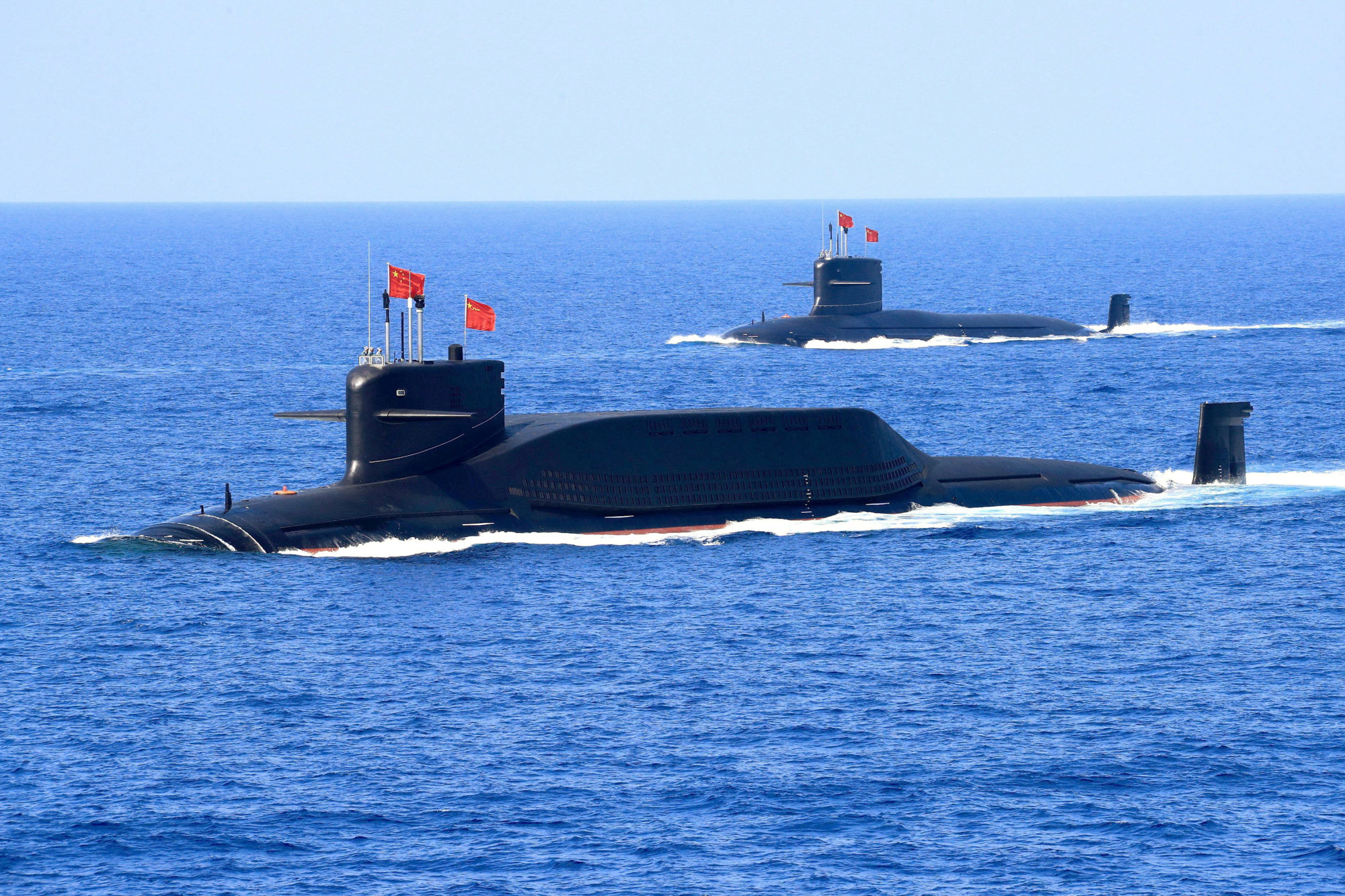
As US-China tensions simmer over submarine operations in the South China Sea, Chinese space scientists have unveiled a breakthrough in magnetic detection technology that could tip the balance in underwater warfare.
A drone-mounted quantum sensor system, tested successfully in offshore trials, achieved picotesla precision to track magnetic anomaly and map seabed resources while overcoming some severe practical limitations of existing devices, researchers disclosed in a peer-reviewed paper.
With such sensitivity, People’s Liberation Army’s (PLA) anti-submarine forces cannot only pinpoint a submarine but also catch the tail waves it generates, according to some previous studies.
Do you have questions about the biggest topics and trends from around the world? Get the answers with SCMP Knowledge, our new platform of curated content with explainers, FAQs, analyses and infographics brought to you by our award-winning team.
Traditional optically pumped magnetometers (OPMs) – widely used in submarine detection – face critical “blind zones” in low-latitude regions like the South China Sea, where Earth’s magnetic field runs nearly parallel to the surface.
When the sensor’s optical axis aligns too closely with magnetic field lines, signals weaken dramatically.
Enter the Coherent Population Trapping (CPT) atomic magnetometer. Leveraging quantum interference effects in rubidium atoms, the device exploits Zeeman splitting – energy level shifts caused by magnetic fields – to generate seven microwave resonance signals.
These frequencies correlate linearly with magnetic field strength, enabling omnidirectional detection regardless of orientation, according to the researchers.
With a sensitivity of 8pT by design – on par with Canada’s MAD-XR system used by Nato allies – the Chinese system eliminates blind zones while cutting costs and complexity.
“The MAD-XR is too sophisticated and expensive, limiting the scope of practical applications in real life,” said the team led by Wang Xuefeng, researcher with the Quantum Engineering Research Centre, China Aerospace Science and Technology Corporation (CASC).
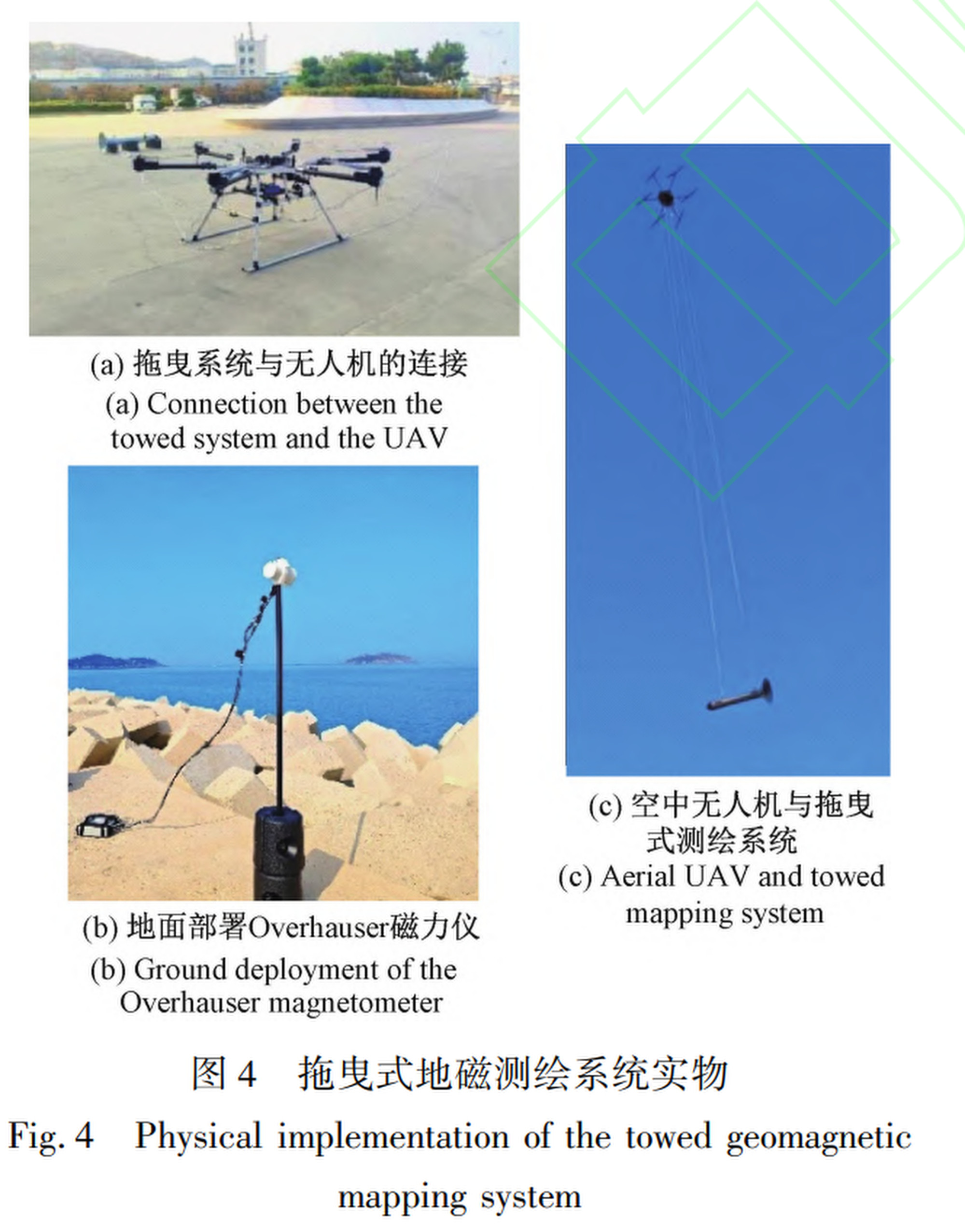
The towed system developed by Wang and his colleagues, described in a paper published in the Chinese Journal of Scientific Instrument on April 16, pairs the CPT sensor with a rotor drone via a 20-metre (65.6ft) cable to minimise electromagnetic interference from the aircraft.
A fluxgate magnetometer corrects heading errors, while GPS and ground stations process data using algorithms that suppress noise, compensate for diurnal geomagnetic shifts, and generate high-resolution anomaly maps.
During trials off Weihai, Shandong province, the drone surveyed a 400 by 300-metre grid with 34 crossover points. Raw data showed 2.517 nanotesla (nT) accuracy, refined to 0.849 nT after error correction – a threefold improvement.
Crucially, two independent surveys achieved a 99.8 per cent correlation in magnetic anomaly maps, with a root mean square error (RMSE) of just 1.149 nT, “demonstrating outstanding stability in real life tests”, Wang’s team added.
This is not just about submarines, according to the researchers. At picotesla-level sensitivity, it can map oil reservoirs, archaeological wrecks, and tectonic shifts.
Yet defence applications loom large. Unlike the MAD-XR – which uses multiple probes to avoid blind spots at high expense – the single-probe Chinese system costs just a fraction, while outperforming in low-latitude waters, according to the researchers.
But battlefield readiness requires more testing under extreme conditions, which are absent from the published trials. MAD-XR has been proven by years of operational data from US, Japan and a few other countries, according to openly available information.
The CASC is China’s largest aerospace defence contractor. Beijing Institute of Aerospace Control Devices also took part in the project.
Scientists in China and some other countries are developing other types of high-performance submarine detectors. The Spin-Exchange Relaxation-Free (SERF) detector, for instance, can reportedly boost sensitivity by 1,000 times to femtotesla range.
More from South China Morning Post:
- Beijing declared milestone on South China Sea Code of Conduct. Is it progress or a tactic?
- China’s deep sea space station: could South China Sea be the next Persian Gulf?
- Fortified South China Sea artificial islands project Beijing’s military reach and power, say observers
- ‘Birds of a feather’: Yuan Zheng on Trump’s China hawks and US rivalry endgame
For the latest news from the South China Morning Post download our mobile app. Copyright 2025.



