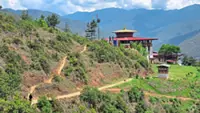
THIMPHU: A study by the Good Governance Committee (GGC) of the National Council of Bhutan warns of a growing rural crisis marked by satong (abandoned land) and goongtong (vacant households), calling for immediate government intervention to reverse what it describes as an alarming trend threatening the country’s agrarian backbone and food security.
The GGC’s findings reveal that between 2010 and 2019, Bhutan witnessed a ten per cent decline in cultivated land, with wetland rice fields—the bedrock of rural livelihoods—hit the hardest. Nearly 6,000 households, primarily in the eastern regions, have been abandoned, contributing to a rapid depopulation of rural areas.
This trend is fuelled by significant shifts in migration patterns, particularly young people leaving for better opportunities in urban areas, seeking employment, education and improved living conditions.
The report cites poor irrigation systems, escalating human-wildlife conflict and chronic labour shortages as key drivers of rural decline. Farmers increasingly find it difficult to maintain wetland rice cultivation due to insufficient irrigation infrastructure. Crop damage by elephants and other wildlife has further discouraged agricultural activity, while a lack of manpower - driven by rural-to-urban migration - has left many fields untended.
The GGC’s report stresses the need to ensure balanced regional development, incentivising the productive use of fallow lands, and implementing more flexible policies for wetland cultivation. The committee also emphasises the need for improved crop and livestock insurance and better support programmes for farmers to create more stability in the rural economy.
In response, the Ministry of Home Affairs (MoHA) has pledged to prioritise balanced regional development in the 13th Plan. The government has earmarked ten per cent of the Annual Grants and Small Development Grants (SDG) to enhance infrastructure in Dzongkhags and Thromdes, with the aim of reducing overpopulation in major cities and fostering regional growth.
The MoHA has also acknowledged the importance of improving access to essential services such as healthcare, education, and ICT in rural areas to mitigate rural-urban migration.
The government is also looking into GGC’s concerns on flexible use of fallow land, particularly wetlands used for rice cultivation, which are no longer viable to be converted to other productive use.
A high-level steering committee, comprising officials from the Ministry of Agriculture and Livestock (MoAL), Ministry of Infrastructure and Transport (MoIT), and the National Land Commission Secretariat (NLCS), is reviewing this proposal.
Efforts are underway to bring fallow land back into production. The government is revising land exchange rules to include private land on steep terrain, aiming to make more land cultivable.
Meanwhile, the MoAL has unveiled an ambitious plan to raise rice self-sufficiency from 25.2 per cent in 2022 to 35 per cent by 2034. This includes increasing rice output from 41,000 metric tonnes (MT) to 64,000 MT over the next decade through improved irrigation, mechanization, and crop insurance.
Rice production has fallen dramatically, from 86,385 MT in 2017 to 40,745 MT in 2022. At the same time, an estimated 66,120 acres of arable land lie fallow. Rice self-sufficiency had dropped from 40.8 per cent in 2018 to 25.2 per cent in 2022, placing Bhutan’s food security at risk.
The GGC report highlights that this decline is directly related to the abandonment of rice cultivation areas and the decrease in available arable land.
The GGC recommends launching a Fallow Land Conversion Policy that would introduce incentives for contract and commercial farming, including cost-sharing models and the creation of a fallow land bank.
Although the NLCS has not yet taken specific actions on converting fallow land into agricultural use, the government is exploring potential collaborations with other relevant agencies. The NLCS has indicated its willingness to provide access to its land type database to assist with these efforts.
To combat the depopulation of rural areas and the increasing migration to urban centres, the GGC recommends the establishment of a Community Vitality Programme aimed at improving livelihoods and creating economic opportunities in borderlands, particularly in areas like Yalang, Toetsho, Lauri, and Serthi. This programme would focus on creating sustainable rural economies by supporting small-scale farming, promoting local industries, and providing access to markets for rural products.
The MoHA, in response to this recommendation and priorities of the government towards improving local government, is promoting a Community Engagement Platform under the 13th Plan. This platform is expected to empower rural communities by providing training on self-help, local decision-making, and community support. The goal is to strengthen local governance and ensure that rural populations, especially women and youth, can thrive in their villages, thereby reducing the pressures of migration.
Human-wildlife conflict remains one of the most persistent challenges facing rural communities in Bhutan. The GGC recommends the scaling up of electric fencing technologies to prevent wildlife from damaging crops.
The MoAL has already allocated a budget for the construction of chain-link fencing across 80 locations in 20 districts as part of the 13th Plan. This initiative aims to reduce the impact of wildlife on farming communities and support efforts to increase agricultural productivity.
In addition to electric fencing, the MoAL is also addressing the broader issue of agricultural support through initiatives such as providing subsidies for fertilisers, pesticides, and improved farm machinery. These interventions aim to help farmers maintain productivity while reducing the risks associated with wildlife conflicts.
The GGC’s study also highlights the decline in access to credit for the agriculture sector, with the share of credit for agriculture falling from 6 percent in FY 2017-18 to 2.3 per cent in FY 2022/23.
The GGC recommends reviewing credit flow and interest rates to create favourable conditions for agricultural development. In response, the MoAL has recognised the challenges in agricultural financing and is working to improve credit access for farmers.
Key initiatives include providing collateral-free loans for youth in agriculture and promoting large-scale commercial farms to improve productivity.
The MoAL is also focusing on improving market linkages and infrastructure to ensure fair prices for agricultural products. These initiatives are expected to support the growth of the agricultural sector and contribute to achieving the country’s goals of self-sufficiency and food security. - Kuensel/ANN