




Standing before representatives from 189 nations 30 years ago, then US first lady Hillary Clinton delivered a speech in Beijing that defined the times.
“If there is one message that echoes forth from this conference, let it be that human rights are women’s rights and women’s rights are human rights, once and for all,” she said at the United Nations’ Fourth World Conference on Women in September 1995.
Hibaaq Osman remembers this moment clearly. The founder and chief executive of Cairo-based Karama, a movement of women’s rights groups in Africa and the Arab region, was one of 30,000 women who had navigated the Chinese capital’s rainy weather and muddy roads to find common ground.
Do you have questions about the biggest topics and trends from around the world? Get the answers with SCMP Knowledge, our new platform of curated content with explainers, FAQs, analyses and infographics brought to you by our award-winning team.
“We were coming from different cultures, but women were there to discuss their troubles, personal and political,” she said.
At the time, the feminist movement in the United States was in its prime, Osman said, and the strong presence of American NGOs and feminists played a crucial role at the conference.
Clinton was widely seen as a “rock star” for women’s rights and the US was pushing for a feminist agenda, though, Osman said, there was disagreement on certain aspects, such as the right to choose and reproductive rights.
“For me, this was a progressive movement, and I didn’t see it as just a US agenda, but rather as a feminist agenda on a global scale,” she said.
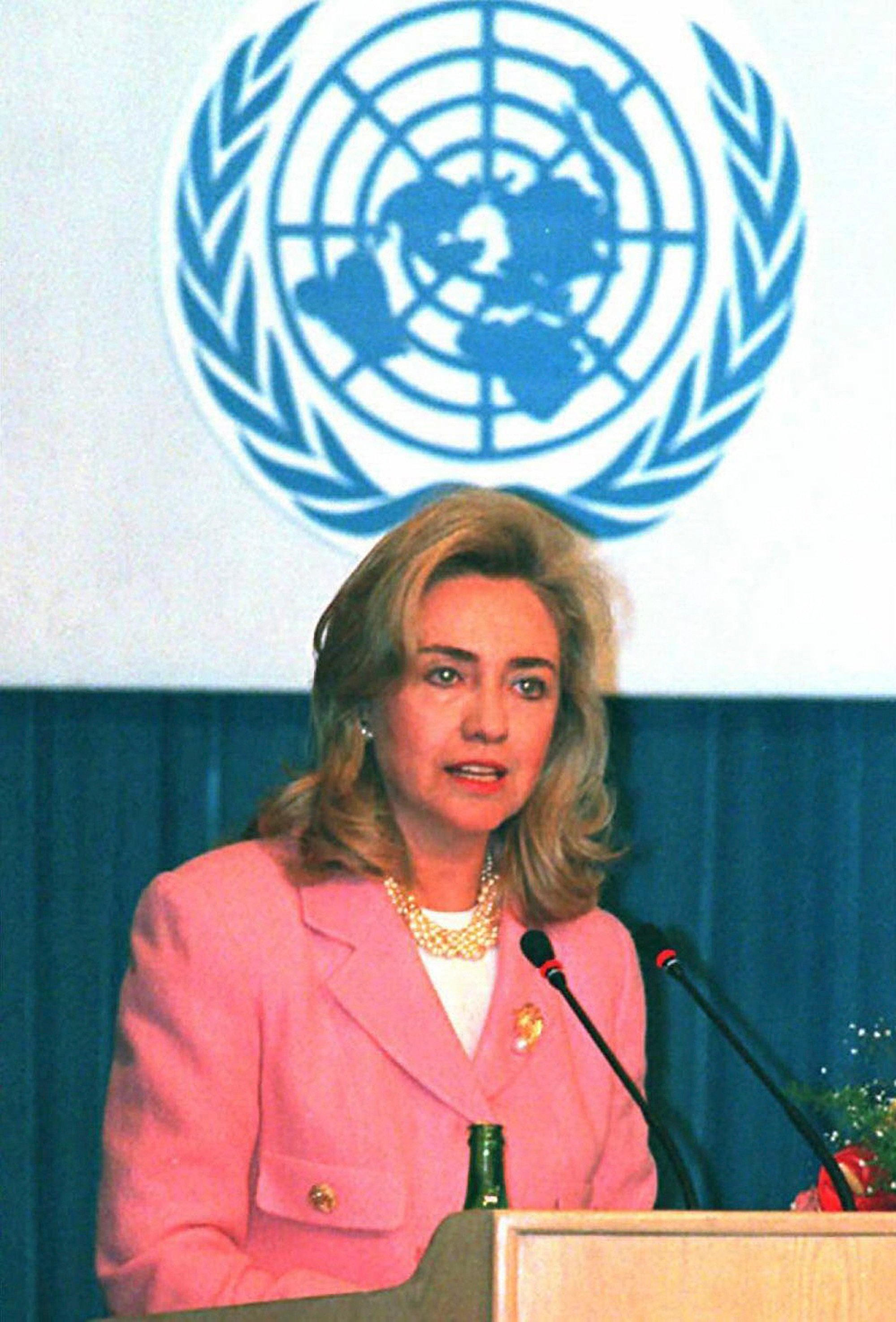
Now, 30 years later, all that has changed. The US had started backsliding on women’s access to abortions and had a regime that was “openly racist, openly anti-women”, she said.
China is also different.
Back then it was trying to emerge from the shadow of the 1989 Tiananmen crackdown. Now, as it prepares to host a new women’s conference later this year, it is ready to highlight its “historic achievements in women’s development”, according to Foreign Minister Wang Yi.
Announcing plans for the conference last week, Wang said the Beijing Declaration and Platform for Action adopted at the 1995 gathering became a milestone in the global pursuit of gender equality, and over the past three decades, China has acted on its spirit.
But feminists say Beijing could struggle to convince a broader audience about its progress on women’s rights, citing clampdowns on feminist activism and NGOs – among other restrictions – in recent years.
In 1995, China was finding its way back onto the international stage after widespread condemnation of the bloody crackdown on pro-democracy demonstrations six years earlier. Security was tight, registration was censored and sheets were prepared in hotels to throw over anyone trying to stage nude protests.
Back then, Feng Yuan was not yet the seasoned feminist she is today. Working as a reporter covering the conference and its parallel NGO forum, she said the experience was “inconceivably eye-opening”, even “more enlightening than decades of education”.
Feng, who founded Equality, a Beijing-based advocacy group against gender-based violence in 2014, said the 1995 event gave her insight into a rich array of feminist schools of thought and practices from across the globe as she covered sessions on topics as diverse as women’s education, the unpaid value of domestic labour and the rights of sex workers.
“Before that, I positioned myself as an observer and thinker, and participating in that conference allowed me to discover another role: an activist,” Feng said.
Others felt the same. Lu Pin, a veteran feminist now based in the United States, said the conference lit a fire under China’s nascent feminist movement.
“It brought the concept of NGOs to China, as well as a feminist perspective – structural criticism and holding the government accountable,” she said.
From then, non-governmental organisations tackling women’s issues flourished in China. In 1996, a group of female journalists launched the Media Monitor for Women Network, advocating for fair reporting of gender-related topics in media.
Lu, a member of the network, went on to launch the Feminist Voices Weibo and WeChat accounts in 2009, which became among the most influential feminist online platforms before being banned in 2018.
Another conference attendee, Guo Jianmei, was so moved by women’s rights lawyers she met that she decided to switch lanes. In 1996, she founded the Centre for Women’s Law Studies and Legal Services at the Peking University law school, providing legal aid for women, especially the poor.
Feng, from Equality, was involved in a network created by a group of women scholars pushing for legislation targeting domestic violence. In 2003, a draft law was submitted to the national legislative body for the first time and 12 years later, it finally became law.
That law was one of the points of progress in women’s rights highlighted in a government white paper published in 2019. Other achievements included equal pay for women, higher education levels and literacy rates, better health outcomes, and improvement in political status.
In terms of broader human rights, China has counted some wins. In contrast with the Western focus on political rights, China has pursued an agenda in education and health, it has also secured a seat on the UN Human Rights Council, being voted on with strong backing in 2023 after Russia was voted out following its invasion of Ukraine.
Authorities have also gradually tackled some of the issues China was most heavily criticised for at the time of the 1995 conference. In 2016, for example, Beijing relented and abandoned its one-child policy, allowing couples to have two children, and now three.
As Wang said last week, China had upheld gender equality as “basic state policy” and “carried out national action plans dedicated to the all-round development of women”. “Countless outstanding women have become role models of our times, making their important contributions to Chinese modernisation,” the foreign minister said.
The state has also spared no effort to praise remarkable women, holding up examples such as Tu Youyou, the first Chinese woman to win a Nobel Prize for her work on an anti-malarial drug. State media also trumpeted Liu Yang, China’s first woman in space who told the UN Human Rights Council in Geneva in February that there was “no ceiling” for her.
But US-based Lu said the authorities cherry-picked facts that looked good, and hosting a global conference served a political purpose: using gender issues to legitimise its rule.
“The conference should in fact create a space for accountability, where people can discuss what the real challenges Chinese women and women’s rights are facing, and how to urge the state to assume responsibilities,” she said.
Among the setbacks that feminists cite is the 2015 detention in Beijing of five activists. The women who later came to be known as the “Feminist Five” were arrested on the blanket charge of “picking quarrels and provoking trouble” over their plan to stage a protest on International Women’s Day against sexual harassment on public transport. Lu, who was suspected of being connected with these women, went into exile in the US.
Two years later, the Law on Domestic Activities of Overseas Nongovernmental Organisations came into effect, stipulating that all foreign NGOs must register with and obtain approval from the police rather than with the Ministry of Civil Affairs, like their domestic counterparts.
The law also made it difficult for domestic NGOs to accept funding from abroad or work with “illegal” foreign NGOs. In the next few years, the lack of funding coupled with constant censorship forced many feminist and LGBTQ groups to close, including Lu’s Feminist Voice accounts.
There are obvious setbacks on the political stage as well. In 1995, there were 12 women among the 190 members of the Communist Party’s Central Committee; in 2025, there were 13 out of 204. There have also been no women among the 24 members of the Politburo since 2022, something not seen for two decades.
In the meantime, though, the new generation of rights advocates has taken the fight online, including China’s #MeToo movement, which ignited in 2018.
One of the pioneers of the movement is Xianzi, the pen name of a woman who sued CCTV host Zhu Jun for harassment. She said that with the help of the internet, young people nowadays hardly needed a conference to inform them of new ideas around the globe. They were already in touch with feminist movies, ideas, and movements abroad, including the 6B4T movement from South Korea, where the members commit to never marry men or bear children.
Xianzi said that in the years since the #MeToo movement took China by storm, dozens of women had spoken out about their experiences, but there was still no mechanism to prevent sexual harassment in universities or companies.
“Furthermore, all this advocacy only stayed online,” she said.
“There’s no way to take action offline, nor is there a way to make more in-depth connections ... even if it’s just a gender-related space, such as a bar or a bookstore, they are not allowed to exist.”
Feng agreed that to fulfil its 1995 commitments, China needed to further address areas like gender-based violence, space for NGO operation, women’s political participation, and gender division of labour. Like many other organisations in China under tougher official scrutiny, Equality exists as a business corporation rather than an NGO.
There is clearly a need for some kind of action, with repeated reports of gender-based violence in public spaces, domestic violence and human trafficking of women.
Cases that have captured national attention include the assault of four women by a group of men at a barbeque restaurant in Tangshan, Hebei province, in 2022; and the discovery last year of a mentally ill woman who had been forced to marry a man and have his children.
Despite the high-profile nature of these cases and the repeated questions raised by the public, the authorities have remained tight-lipped about the fate of these women. No media outlets or public figures have been able to contact the women.
Feng said women in general were also still bearing most of the burden of childcare even as China was encouraging couples to have more children. Many policies – family, childcare, and employment – lacked a real gender equality perspective, she said.
“I believe the most important point is that gender equality cannot be just a slogan, a principle, or the laws on paper,” she said. “It requires a clear and strong political will and concrete policies and measures to bridge the gap between current progress and commitments and achieve true gender equality.”
Feng noted that China had given few details about this year’s women’s summit but “from an advocacy perspective, we hope to promote the representation of more diverse civil organisations with varied characteristics, approaches, and values”.
Osman, who was in Beijing 30 years ago, said there might be a lot of challenges to holding another conference but there was “absolutely the need” for a major event.
“[A conference is] the one that really has to deal with all these emerging issues, climate, gender, among other things,” she said.
More from South China Morning Post:
- Chinese political adviser calls for easier divorce despite Beijing’s push for family values
- Bid to lower China’s marriage age faces opposition
- Why ordinary Chinese oppose lowering the legal marriage age to 18
- As China urges couples to have children, reality TV shows tell a different story
- Chinese police can use text message evidence in crackdown on domestic violence
For the latest news from the South China Morning Post download our mobile app. Copyright 2025.


