




A peer-reviewed study published earlier this month estimated that 35 per cent of China’s cropland could disappear by 2100, even if the world delivers on its pledge to limit global warming under the Paris Agreement.
The research raises concerns about food security and highlights the need for updated cropland protection policies.
According to the scientists, agricultural land will largely be converted into wetlands and forests, particularly in grain-producing regions such as the Sichuan Basin and the plains of north and northeast China.
Do you have questions about the biggest topics and trends from around the world? Get the answers with SCMP Knowledge, our new platform of curated content with explainers, FAQs, analyses and infographics brought to you by our award-winning team.
Significant shifts will occur in cropland and grassland areas in China’s southern and coastal regions, along with changes in wetland areas along the eastern coastline and the southern coastal zone, according to the study.
Gao Peichao, deputy director of Beijing Normal University’s Centre for Geo-Data and Analysis, and his team published their findings in the February issue of Science China Earth Sciences.
Using information from a publicly available data set called CLUMondo, the researchers created a detailed map showing different land types: cropland, forest, shrub land, wetland, water bodies, artificial surfaces, and areas covered in snow or ice. Each land type was classified as low, medium or high density.
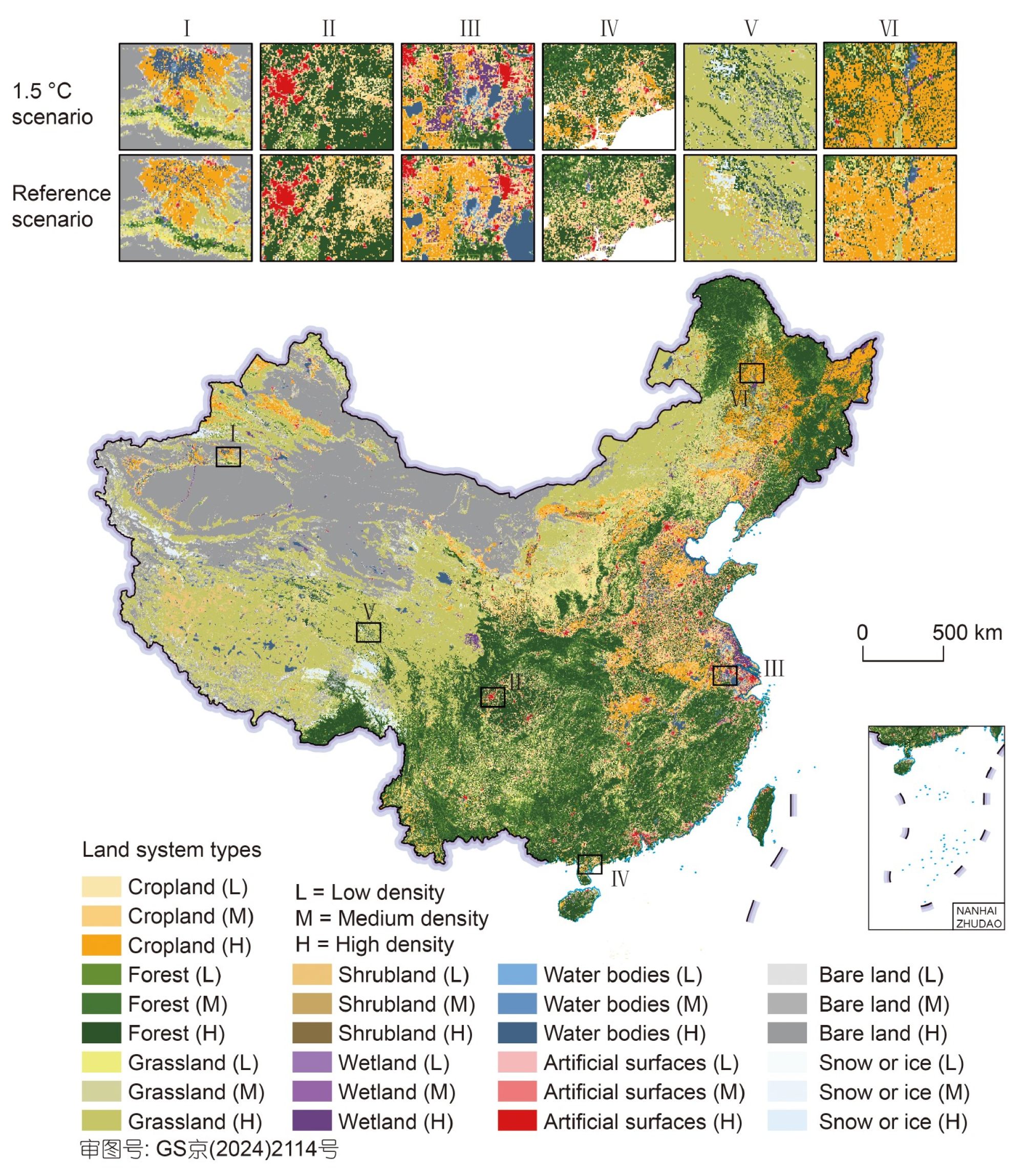
The team combined a version of the CLUMondo land change model with the Global Change Assessment Model, which is used to show the effects of climate change and various policies to mitigate it.
The scientists used these two models to understand how land use might change if temperatures rise 1.5 degrees Celsius (2.7 degrees Fahrenheit) above pre-industrial levels. That number is significant as it is the target threshold for capping average temperatures under the Paris Agreement to avoid the worst effects of climate change.
According to their analysis, even if all countries that have signed on to the landmark UN climate treaty were to succeed in limiting global warming to 1.5 degrees or less by 2100, China would still lose 35 per cent of its cropland.
To achieve their climate change goals, countries would need to raise their emission reduction targets before 2030 and achieve a minimum decarbonisation rate of 8 per cent after that, plus each country must meet its target for net-zero emissions, according to the study.
The team also estimated that in this scenario, China’s high-density cropland would nearly halve, mainly in key grain-producing regions.
The research was funded by the National Natural Science Foundation of China, and the results were submitted to the government, according to the scientists.
In a 2023 study, Gao and his team said policies for cropland protection and food security should be updated, with a focus on monitoring areas prone to loss of cropland, improving the quality of agricultural land, assessing China’s future food needs, and optimising cropland resource allocation and management.
Last year was the warmest year on record, according to the World Meteorological Organization (WMO), with the global average surface temperature sitting 1.55 degrees above the 1850-1900 average.
According to a preliminary assessment by another WMO International Panel of Experts, long-term global warming is now about 1.3 degrees above the pre-industrial baseline.
Only 13 of the 195 parties to the Paris Agreement had submitted emission reduction templates as of the February 10 deadline.
China, the European Union, India, and other major economies did not submit them on time. The US submitted its climate target late last year, but US President Donald Trump later moved to withdraw the country from the Paris Agreement when he took office last month.
More from South China Morning Post:
- Tibetan tree rings highlight link between climate change and fall of major Chinese dynasties
- Scientists say 2024 was first year above 1.5 degrees of global warming
- Has Trump created an opening for China by quitting WHO and Paris Agreement?
- Immigration crackdown, withdrawal from WHO and Paris Agreement among Trump’s first acts
- China urges US to hold the line on climate policy, regardless of election outcome
For the latest news from the South China Morning Post download our mobile app. Copyright 2025.


