
US President Donald Trump has called Chinese AI start-up DeepSeek’s strong showing a “wake-up call” and “positive” for America’s tech sector, and also warned that he would slap tariffs on foreign-made semiconductor chips, including those made by Taiwan’s TSMC, if they do not start producing them stateside.
“Today and over the last couple of days, I’ve been reading about China and some of the companies in China, one in particular, coming up with a faster method of AI and much less expensive method. And that’s good, because you don’t have to spend as much money. I view that as a positive, as an asset”, Trump told Republican lawmakers gathered at his Doral golf resort in Miami, Florida.
He added: “The release of DeepSeek AI from a Chinese company, should be a wake up call for our industries, that we need to be laser focused on competing to win, because we have the greatest scientists in the world”.
Do you have questions about the biggest topics and trends from around the world? Get the answers with SCMP Knowledge, our new platform of curated content with explainers, FAQs, analyses and infographics brought to you by our award-winning team.
Trump also pledged during his remarks that under his administration “we’re going to unleash our tech companies, and we’re going to dominate the future like never before”, telling American tech firms that “you’ll be doing that too, so you won’t be spending as much, and you’ll get the same result”.
DeepSeek’s AI reasoning model R1 was published fully open-source last week. The announcement sparked a sell-off in US tech stocks on Monday, with investors fearing that the new AI model could threaten the dominance of current leaders in the space.
The market jitters were particularly severe for US semiconductor giant Nvidia, which saw a staggering US$592.7 billion drop in market value amid growing concerns over China’s rapidly advancing AI technology.
According to DeepSeek, its latest AI model required less than US$6 million worth of Nvidia’s less advanced H800 chips. This breakthrough represents a significant challenge to US policy, which has relied on sanctions and export controls to limit China’s access to advanced technology.
The H800 chips were introduced in November 2022 as a more affordable alternative for Nvidia’s Chinese customers, just a month after the US imposed its initial restrictions on exports of advanced microchips and equipment to China.
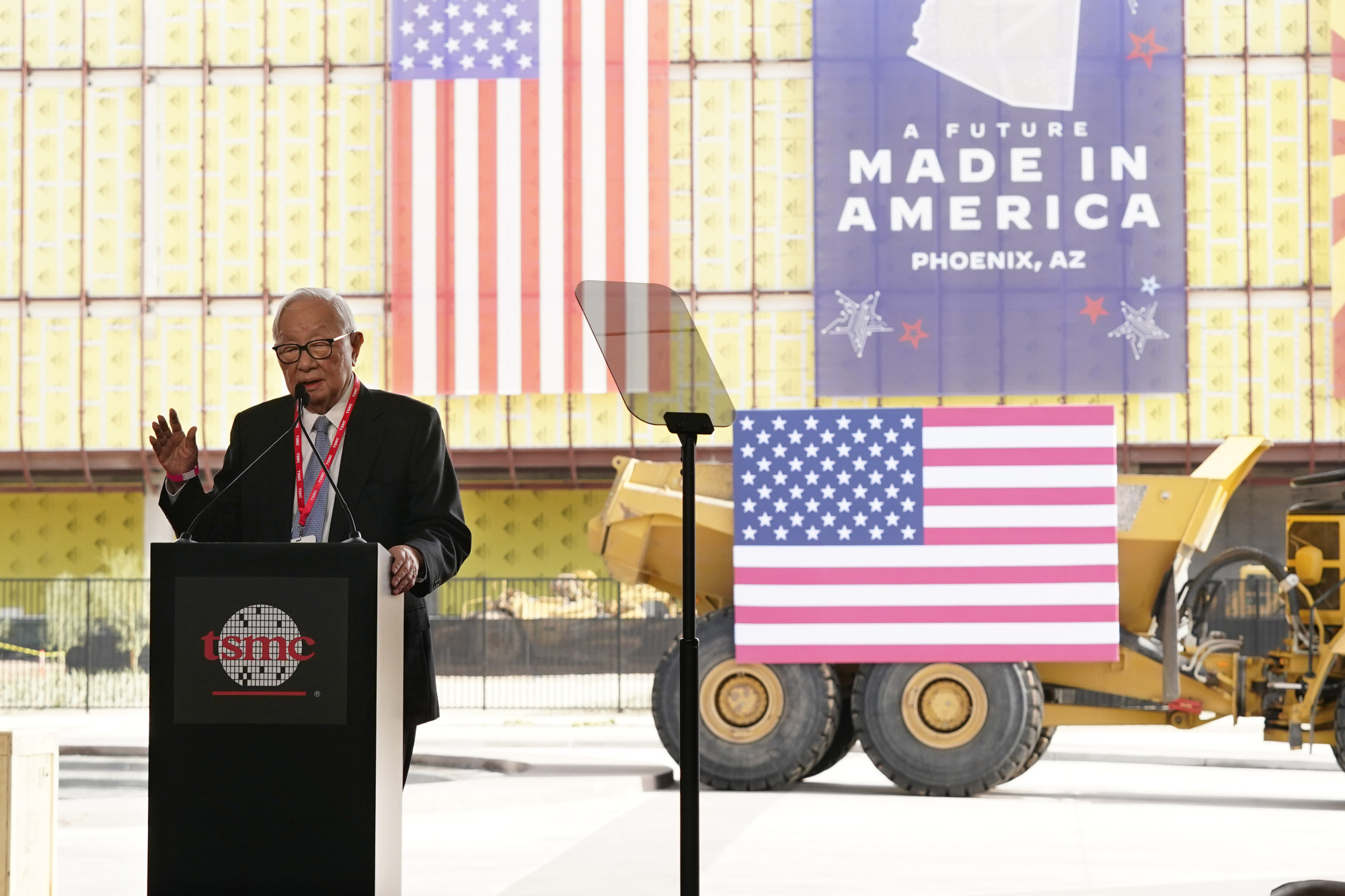
Last year, the US also pressured Taiwan – home to the world’s largest chipmaker, Taiwan Semiconductor Manufacturing Company (TSMC) – to prevent the sale of its most advanced chips to mainland Chinese companies.
TSMC has been constructing two plants in Arizona. The first, a $12 billion facility, was approved during Trump’s first term as US president in 2020, which his administration touted as a significant win, while the second plant was announced during President Joe Biden’s term in 2022.
Biden approved nearly US$6 billion in subsidies under the Chips and Science Act, his signature initiative to bring chip manufacturing back to American soil.
Speaking to CNBC a day before Trump’s inauguration, TSMC Chief Financial Officer Wendell Huang expressed confidence that the funding would continue to flow under Trump as the fabrication plants reached construction and production milestones.
The first fabrication plant in Arizona started producing advanced chips in the fourth quarter of last year, Huang said in the interview. He added that the construction of two plants in Arizona was on track, with the second expected to be operational in 2028.
On Monday, Trump suggested he might impose tariffs on Taiwan and end subsidies for its tech companies manufacturing in the US.
Warning about the imposition of tariffs on semiconductor chips, Trump remarked: “They left us, and they went to Taiwan, which controls about 98 per cent of the chip business, by the way.”
“We want them to come back, but we don’t want to give them billions of dollars like this ridiculous programme Biden’s offering. They already have billions of dollars,” Trump continued.
“We don’t need to give them money. They’re going to come back because it’s in their interest to do so,” he said, calling the establishment of plants in the US the “only way” to avoid tariffs.
More from South China Morning Post:
- US tech stocks plunge on China AI’s unexpectedly strong showing
- What does rise of AI firm DeepSeek mean for US-China tech war, and the race for talent?
- Chinese AI disrupter DeepSeek claims top spot in US App Store, dethroning ChatGPT
- TSMC’s US plant unlikely to get latest chip technology ahead of Taiwan, CEO says
For the latest news from the South China Morning Post download our mobile app. Copyright 2025.