SINGAPORE (The Straits Times/ANN): Astronomy buffs, undeterred by cloudy skies and rain, managed to catch a glimpse of the planet Mars on the night of Jan 16, when it was at its closest to Earth in 2025.
Mars was also at its brightest and most vivid as it was in opposition. That means Earth passed directly between Mars and the Sun, causing an alignment between the three celestial bodies.
This alignment caused Mars to appear bigger, brighter and redder.
Stargazers in Singapore who managed to catch a glimpse of the planet posted photographs of the celestial body on their social media accounts.
Some were even able to see the planet from the comfort of their home.
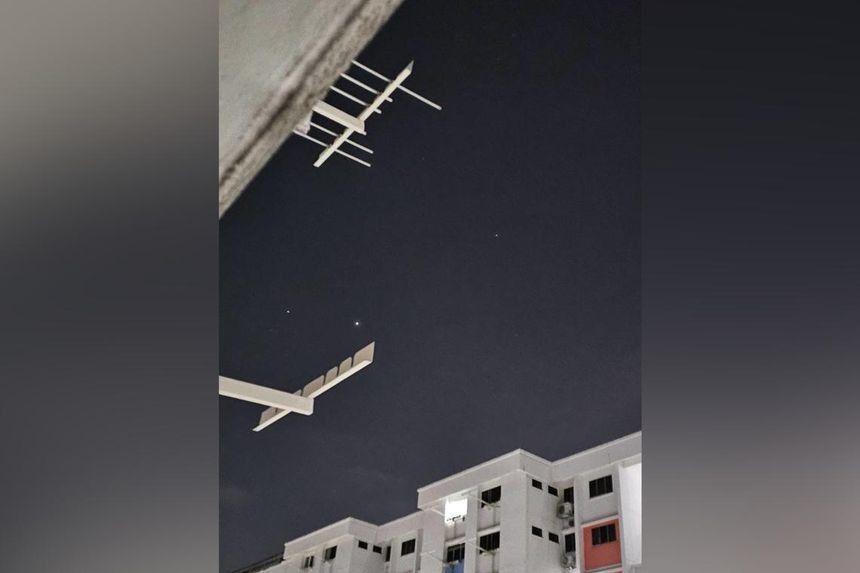
However, several netizens said they were not able to see the planet due to the cloud cover. Also, the moon was in its waning gibbous phase, when it is between a full moon and a half moon.
That meant the moon was bright and it made it more difficult to spot Mars. A few netizens commented that Mars looked like “a normal star” in the sky.
Yee Yin Cheong, a property agent who lives in Canberra, said: “I observed the planet from my place, near Canberra MRT Station. The sky was quite clear. And I used an app called Sky Guide to confirm the location of Mars.”
Deputy Prime Minister Heng Swee Keat, too, took to Facebook to share an image of Mars.

Mars, which is the fourth planet from the Sun, is known as the Red Planet because of the iron minerals in its dirt which oxidise or rust, and appear red.
Mars oppositions are special because they happen roughly every two years. Earth takes a year to circle the Sun, while Mars takes about two. The next opposition will not occur until Feb 19, 2027.
The planet is a “dusty, cold, desert world with a very thin atmosphere,” United States space agency Nasa wrote on its website. It is one of the most widely explored bodies in the solar system, and the only planet to which Nasa has sent rovers, it added.
Nasa missions have discovered evidence that point to a much warmer and wetter Mars, with a thicker atmosphere, some billions of years back. - The Straits Times/ANN