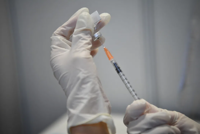
Project Wolbachia to curb dengue to extend to five more residential areas


The expansion of Project Wolbachia comes after positive results from ongoing field studies in areas such as Tampines and Yishun. - ST

SINGAPORE: From early 2024, five more residential areas will be covered by a dengue-curbing programme that releases lab-grown male mosquitoes to suppress the population of disease-carrying mozzies.

Project Wolbachia, as the programme is called, will be expanded to Bukit Merah-Telok Blangah, Clementi-West Coast, Commonwealth, Holland and the Marine Parade-Mountbatten areas, after positive results from ongoing field studies.

The male Wolbachia bacteria-carrying Aedes aegypti mosquitoes will be released to those residential sites from the first quarter of 2024, covering 480,000 households, up from 350,000 currently. This means that 35 per cent of all homes in Singapore – including HDB and landed estates – will be covered under the programme.

Announcing the expansion of the programme on Tuesday (Nov 21), Senior Parliamentary Secretary for Sustainability and the Environment Baey Yam Keng, who was speaking at the International Vector-Borne Diseases Conference, said: “In the last four years, residents in areas with at least one year of releases were up to 77 per cent less likely to be infected with dengue.”

Those areas include Tampines and Yishun.

The National Environment Agency (NEA) added that the five new locations were chosen based on historical dengue risk, the Aedes mosquito population, and the agency’s capacity for producing and releasing male Wolbachia-Aedes mosquitoes.

Associate Professor Ng Lee Ching, group director of NEA’s Environmental Health Institute, noted that as a sizeable number of dengue cases in study sites were isolated and not linked to clusters, the infected individuals could have acquired dengue elsewhere rather than within the release sites.

But while the programme has led to the Aedes mosquito population falling by more than 90 per cent in some areas, it has been observed that Project Wolbachia’s impact on mosquito population and dengue varied across sites and years, added Baey at the conference.

The three-day conference from Nov 21 to 23, held at the National University of Singapore (NUS), and led by the NUS Yong Loo Lin School of Medicine and the university’s Department of Biological Sciences, convenes renowned entomologists, vector biologists and virologists who will discuss developments in vector-borne diseases.

NEA is also using data analytics and artificial intelligence as a predictive tool to adjust the number of male mosquitoes at each site.

“This helps to optimise our deployment strategy and reduce the number of male mosquitoes needed to support dengue suppression in these areas,” said Baey.

NEA also plans to develop an additional source that can supply more Wolbachia-carrying mosquitoes, to increase the programme’s capacity as it expands. Currently, the mosquitoes are supplied by the agency and Verily Life Sciences. NEA said it will engage the industry on this matter.

Project Wolbachia started in 2016. Under the programme, non-biting male mosquitoes, infected with the Wolbachia bacteria, are released across the city to mate with uninfected females, producing eggs which do not hatch, to reduce reproduction of their kind.

As at May, more than one million residents have benefited from the programme.

While Project Wolbachia is a novel solution, it is not a silver bullet to prevent dengue outbreaks, said NEA.

“The presence of Aedes mosquitoes, ongoing circulation of multiple dengue virus serotypes, and low population immunity will continue to challenge dengue control efforts,” noted the agency, reminding residents to continue removing stagnant water and take steps to prevent getting bitten.

So far, more than 8,740 dengue cases have been recorded in 2023, around a quarter of the 32,325 cases recorded in the whole of 2022, which saw a major outbreak.

Get 20% OFF The Star Digital Access

Monthly Plan

RM 13.90/month

RM 11.12/month

Billed as RM 11.12 for the 1st month, RM 13.90 thereafter.

Best Value

Annual Plan

RM 12.33/month

RM 9.87/month

Billed as RM 118.40 for the 1st year, RM 148 thereafter.

Follow us on our official WhatsApp channel for breaking news alerts and key updates!
Singapore , dengue , Wolbachia , project

Next In Aseanplus News

Myanmar hosts international conference to promote digital economy sector
Viral monkey Punch celebrates first birthday at Japanese zoo
Nakai-Nam Theun Park in Laos advances towards Asean, Unesco recognition
Thailand enforces two-day alcohol sales ban during Buddhist holidays
Lee, Lula expand strategic partnership with defence, space and critical minerals push
India, Cambodia agree to Pursat demining project
Prabowo’s approval rating sinks amid dissatisfaction with economy, politics
Malaysian chess player claims podium finish at Brunei Sultan's birthday tournament
Party chief calls for stronger leadership to boost anti-corruption inspections
Shooting stars set to streak across Singapore sky on July 29, 30

Others Also Read