
A US federal judge has refused to lift trade restrictions on a subsidiary of Hong Kong-based textile company Esquel Group, which had been placed on the Commerce Department’s “entity list” for its activities in the Xinjiang Uygur autonomous region.
In his ruling on Wednesday, US District Judge Reggie B. Walton in Washington found that Esquel, one of the world’s biggest shirt makers, was not likely to succeed in its case against the department because it failed to show that Commerce had acted beyond its legal authority.
The rejection of a preliminary injunction does not kill Esquel’s case, but it dealt a blow to its subsidiary in Xinjiang, which has been unable to supply major clients like Nike, Patagonia and Tommy Hilfiger since being placed on the blacklist a year ago.
Do you have questions about the biggest topics and trends from around the world? Get the answers with SCMP Knowledge, our new platform of curated content with explainers, FAQs, analyses and infographics brought to you by our award-winning team.
Commerce added Changji Esquel, the subsidiary, to the list a year ago, banning it from doing business in the US – part of a larger US campaign to sanction companies over alleged human rights abuses against Uygur Muslims in Xinjiang.
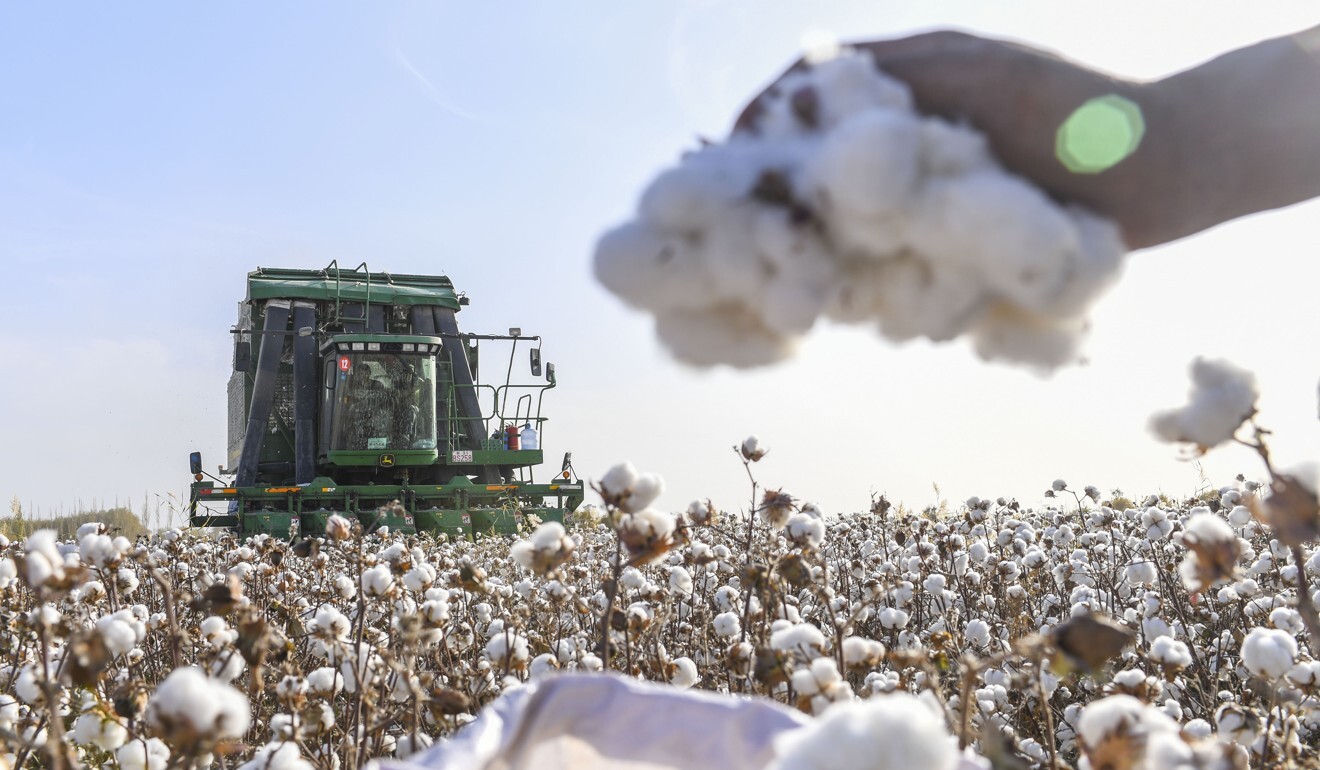
At that time the unit was one of 11 Chinese companies sanctioned for alleged ties to forced labour in Xinjiang; in July, another 14 Chinese firms were sanctioned over their role in suspected human rights abuses in the region.
The Xinjiang region produces about 85 per cent of China’s cotton and about a fifth of the world’s cotton supply.
In July, the company sued the Commerce Department and other US agencies and officials over the unit’s inclusion.
In its federal lawsuit, Esquel, which has had a presence in Xinjiang for a quarter of a century, said it has tried to engage with the US government to correct the record, but had received no meaningful response or evidence to support the inclusion of its Xinjiang unit.
Esquel resumes lawsuit to remove Xinjiang unit from US forced-labour sanctions list
“We intend to appeal the decision” and move forward with litigation “to seek an end to Changji Esquel’s mistaken listing”, Esquel said in a statement on Thursday.
“The court did not fully explain its rationale” and “we continue to believe that Changji Esquel’s original listing by the previous administration was unlawful and that it deserves to be removed from the entity list without further delay.
“No Esquel company has ever used, or will ever use, forced labour,” it added.
Separately, Esquel has also been working with a US inter-agency body called the End-User Review Committee to remove the subsidiary from the entity list. The committee voted in August to remove Changji Esquel under certain conditions and the company has since been working to satisfy these conditions.
The company said that US Customs and Border Protection had detained millions of dollars worth of its shipments from its factories outside China.
On Thursday, Esquel said since the subsidiary ended up on the blacklist, the company “lost a significant portion of its annual revenue totalling hundreds of millions of dollars” that has resulted in the closure of two factories in Mauritius and the loss of more than 7,000 jobs worldwide.
Esquel scores rare win in bid to remove Xinjiang unit from US sanctions list
Esquel’s chair, Marjorie Yang Mun-tak, has said that several Esquel clients, including two large, established US brands, have had about US$1.6 million in shipments from Vietnam detained or flagged for intensive examinations, despite not containing any cotton fibres or yarn from Xinjiang or China.
The scrutiny, she said, was potentially forcing the company to miss commitments to customers and causing “permanent economic and reputational damages”.
The US, as well as human rights groups and a United Nations committee, contend that as many as 1 million Uygur Muslims, Xinjiang’s largest ethnic group, have been detained in “re-education centres” and subjected to indoctrination, torture and forced labour. Beijing has denied the accusations and said that any such facilities were job-training centres.
More from South China Morning Post:
- Xinjiang exports rattled by coronavirus outbreaks in Central Asia as risks from US sanctions loom
- How is Xinjiang’s economy holding amid US sanctions, and can China keep supporting its ‘great burden’?
- China’s Xinjiang gets money, talent from ‘pairing assistance’, but is the controversial programme helping?
For the latest news from the South China Morning Post download our mobile app. Copyright 2021.
Already a subscriber? Log in
Get 20% OFF The Star Digital Access
Cancel anytime. Ad-free. Unlimited access with perks.