
THE Covid-19 pandemic has forced travel agencies in Asia to revamp their business models with many pivoting to asset-light models and maintaining a more flexible workforce. Others are seeking new opportunities by partnering with thriving sectors such as logistics providers to tide through the crisis.
The slump in travel demand has made travel agencies question the old ways of doing business and their sustainability, as the future of travel is set to be different than before, said Rabia Yasmeen, consultant at market research provider Euromonitor International.
“Traditional tour operators that rely on offline sales and physical presence are now thinking of moving online,” said Yasmeen. Online travel agencies and holiday-booking platforms that were previously investing heavily in search engine optimisation and advertisements are also seeking to reduce costs and overheads, she added.
Get the latest insights and analysis from our Global Impact newsletter on the big stories originating in China.
Travel intermediaries like tour operators and travel agencies have borne the full brunt of the pandemic, with a 46 per cent fall in global sales last year compared to an annual growth rate of 5 per cent in the prior five-year period, according to Euromonitor data. Those in Hong Kong saw a 68 per cent decline while their Singaporean counterparts suffered a 59 per cent drop.
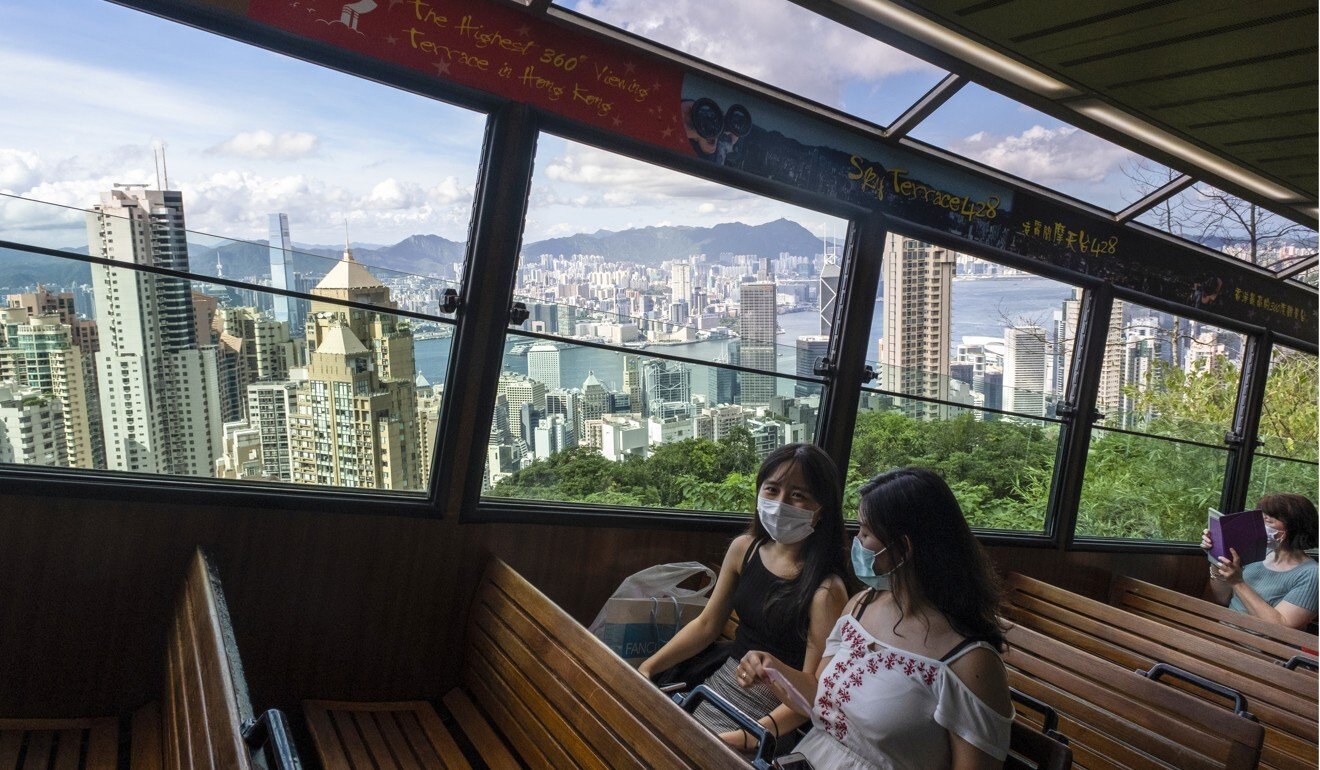
In Hong Kong, tourist arrivals plunged nearly 94 per cent year on year in 2020 to just 3.57 million, a 36-year low, according to data from the Hong Kong Tourism Board.
Agencies are thinking how to be operationally lean, to ensure that they can continue doing the same amount of work with fewer resources while waiting for business to pick up, said Steven Ler, president of the National Association of Travel Agents Singapore, or Natas.
“The pandemic meant that people cannot operate from the office, making agencies rethink their cost structures and consider resource scalability,” said Ler, noting that manpower and rent were the main operating costs for travel agencies.
In Hong Kong, 88 travel firms went out of business last year, while others have been forced to lay off employees and move to smaller premises, according to the Travel Industry Council. As of December, 1,734 agencies remained in business.
More travel agencies in the city are using technology to provide the same services with less manpower, such as tapping onto Zoom meetings or customer relationship management software, said Ronald Wu, chairman of the Hong Kong Association of Travel Agents.
Industry observers also suggest that travel firms should collaborate by consolidating back-end processes to remain asset-light at least until the industry bounces back from the crisis.
“All agencies issue tickets and the functions are technically the same,” said Ler of Natas in Singapore. “Is there then an opportunity to consolidate these operational processes into a central kitchen or to outsource to third party for efficiency?”
While Ler acknowledged that collaboration would not be easy as it would require a change in mindset, Euromonitor’s Yasmeen said there may be room for improvements. Travel agencies operating in different regions within the same country could collaborate to minimise administration costs, she added.
In the early stages of the pandemic, some agencies pivoted quickly and partnered with distribution companies, redeploying manpower and vehicles for courier services. To tide through the crisis, travel agencies have also sought partnerships with other sectors that are thriving.
“A lot of travel agencies are working with e-commerce partners to source for souvenirs for their customers – Japanese fruits, Taiwanese snacks or salted egg yolk chips from Singapore – to expand their business and for customer retention,” said Wu.
“Hopefully this should create a win-win situation for both travel companies and the consumer [when business returns to normal].” - South China Morning Post
Already a subscriber? Log in
Get 20% OFF The Star Digital Access
Cancel anytime. Ad-free. Unlimited access with perks.